More than a third of heat in uninsulated homes escapes through the walls, costing families hundreds each year. Cavity wall insulation targets this hidden problem by filling the gap inside your home’s double walls. With the right materials and expert installation, you can increase comfort and cut energy bills while avoiding common pitfalls. Understanding the basics helps you choose the best solution and see real savings in both warmth and money.
Table of Contents
- What Is Cavity Wall Insulation? Key Concepts
- Main Types of Cavity Wall Insulation Materials
- How Cavity Wall Insulation Is Installed
- Regulations and Compliance for UK Installations
- Risks, Failures, and Common Pitfalls
- Choosing the Right Insulation for Your Property
Key Takeaways
| Point | Details |
|---|---|
| Importance of Cavity Wall Insulation | Enhances energy efficiency and comfort by filling wall cavities to reduce heat loss. |
| Material Selection | Choose insulation based on building characteristics, moisture resistance, and thermal performance. |
| Professional Installation | Proper installation requires expertise to prevent risks such as moisture infiltration and structural damage. |
| Regulatory Compliance | Cavity wall insulation is subject to UK building regulations ensuring safety and performance standards are met. |
What Is Cavity Wall Insulation? Key Concepts
Cavity wall insulation is a critical home improvement technique designed to enhance energy efficiency and comfort by strategically filling the gap between a building’s external wall layers. According to Energy Saving Trust, this method involves inserting insulating material into the hollow space separating a home’s inner and outer wall structures.
Most residential buildings constructed after the 1920s feature double-skin walls with a narrow gap or cavity between them. This cavity, typically ranging from 50 to 100 millimeters wide, was originally created to prevent moisture penetration. However, when left unfilled, it becomes a significant source of heat loss. Center for Sustainable Energy explains that by professionally filling this space with specialized insulating materials, homeowners can dramatically reduce thermal transfer and improve overall building performance.
The primary types of cavity wall insulation materials include:
- Mineral wool: Made from recycled materials, offering excellent thermal properties
- Polystyrene beads: Lightweight and easy to inject into wall cavities
- Polyurethane foam: Provides superior insulation and air sealing capabilities
Successful cavity wall insulation requires precise installation techniques. Improper application can lead to moisture retention, potential structural issues, and reduced effectiveness. Homeowners considering this upgrade should always work with certified cavity insulation condition inspection professionals who can assess wall suitability and ensure proper installation.
Main Types of Cavity Wall Insulation Materials
Cavity wall insulation materials play a critical role in determining a home’s thermal efficiency and long-term performance. Center for Sustainable Energy identifies three primary materials used in modern cavity wall insulation: polystyrene beads, mineral wool, and expanding foam, each offering unique characteristics for different building requirements.
According to The Eco Experts, the most common cavity wall insulation materials can be categorized into several key types:
- Blown Mineral Fibre: A traditional insulation material made from recycled glass or rock, providing excellent thermal and sound insulation properties
- Polystyrene Beads: Lightweight, easy to install, and resistant to moisture, making them ideal for various wall constructions
- Urea Formaldehyde Foam: A less common but highly effective insulation material with good thermal performance
Each material presents distinct advantages and potential limitations.
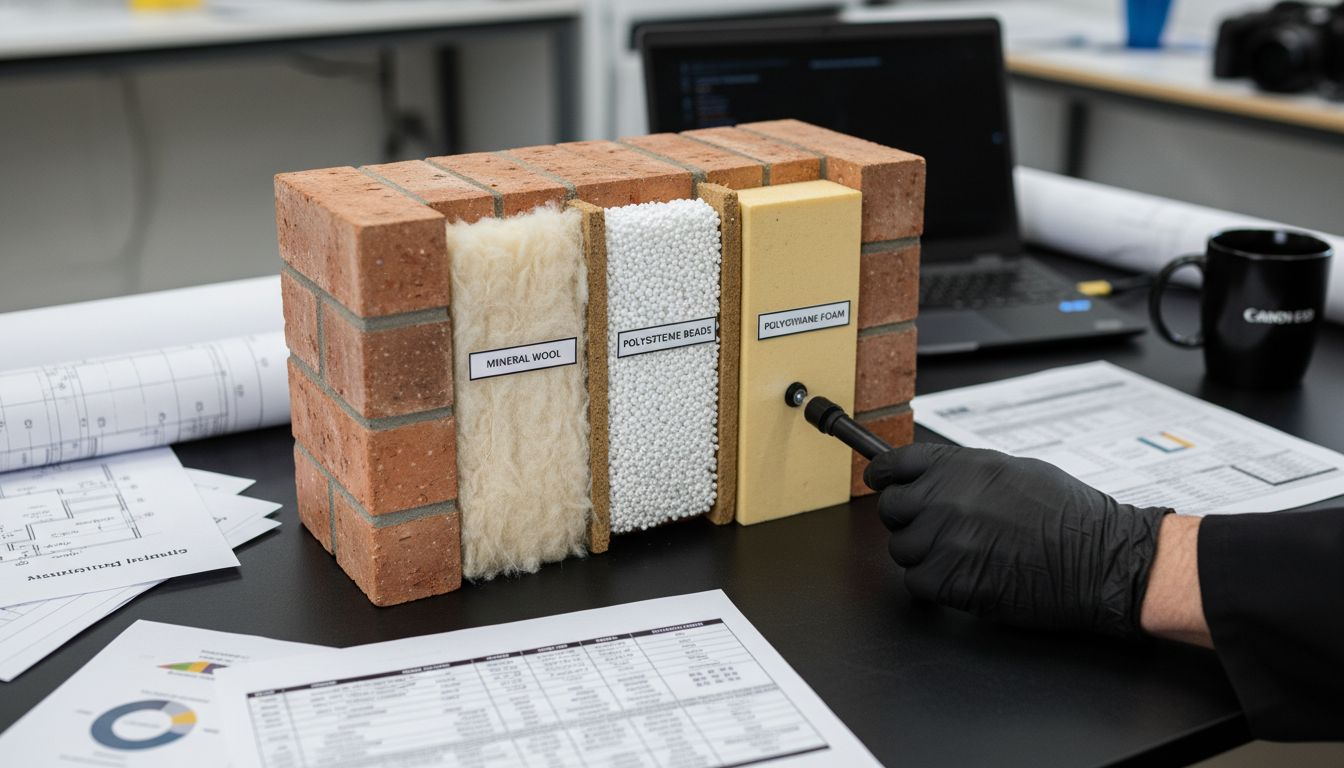 Mineral wool, for instance, offers superior fire resistance and sound dampening, while polystyrene beads excel in moisture-prone environments. Homeowners should carefully consider their specific building characteristics and climate conditions when selecting an insulation material.
For comprehensive guidance on choosing the right cavity wall insulation, consulting a professional cavity wall insulation condition inspection service can provide tailored recommendations based on your home’s unique requirements.
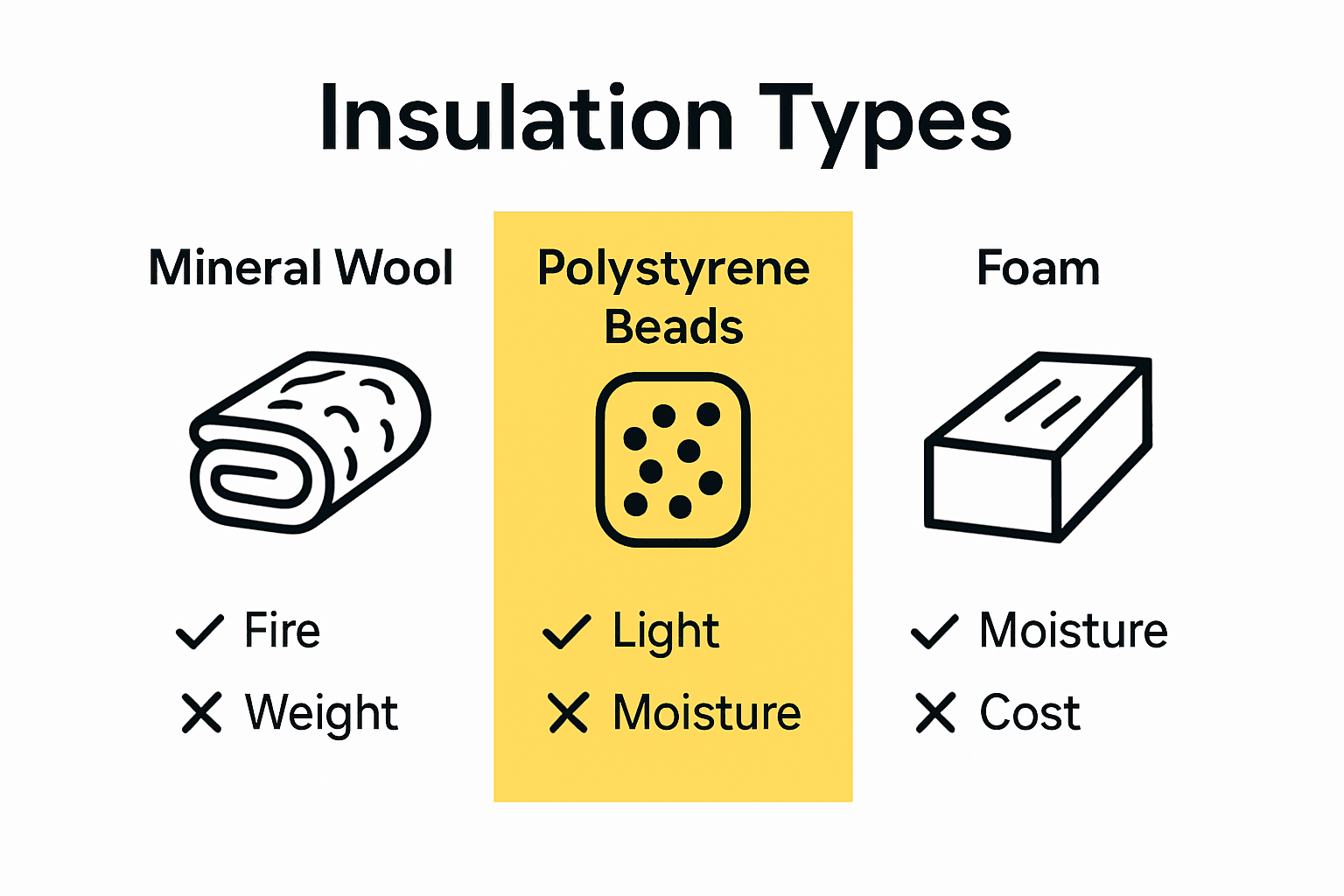
Here’s a comparison of the main cavity wall insulation materials:
| Insulation Material | Key Benefits | Typical Drawbacks |
|---|---|---|
| Mineral Wool | Excellent thermal and sound resistance Fire resistant |
Can retain moisture Heavier than alternatives |
| Polystyrene Beads | Easy to install Moisture resistant |
Lower sound insulation May settle unevenly |
| Urea Formaldehyde Foam | Good thermal performance Expands to fill gaps |
Less common Can degrade over time |
| Polyurethane Foam | Superior air sealing High insulation value |
More expensive Poor vapor permeability |
| Blown Mineral Fibre | Made from recycled glass/rock Good thermal and sound properties |
Can cause respiratory irritation |
How Cavity Wall Insulation Is Installed
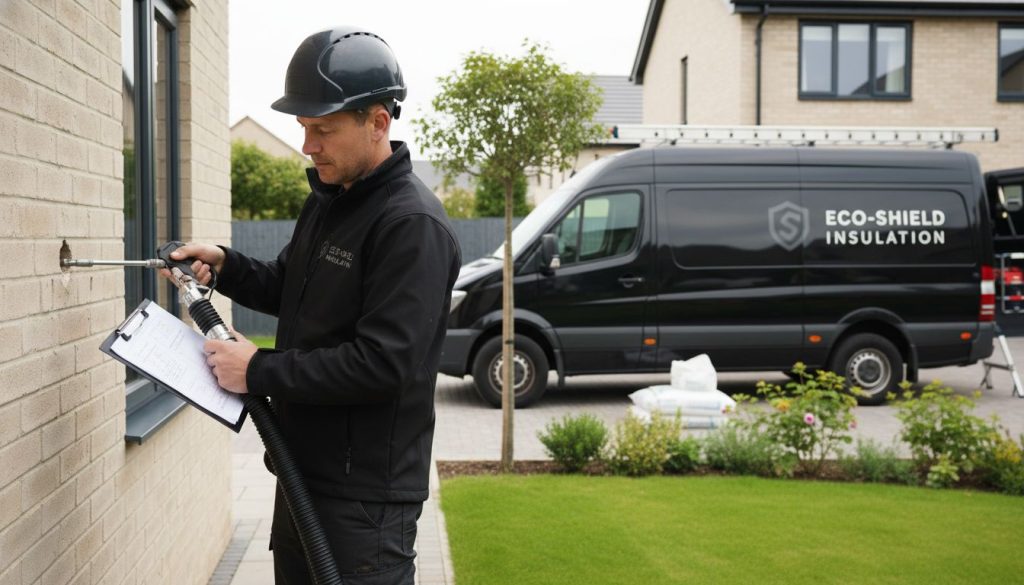
Home Building explains that cavity wall insulation installation is a precision process requiring professional expertise. The method typically involves carefully drilling small access holes at strategic points along the external walls, creating entry points for specialized injection equipment that will fill the wall’s hidden cavity with insulating material.
According to Energy Saving Trust, the installation process follows a systematic approach:
- Pre-Installation Assessment: Professionals conduct a thorough structural survey to determine wall suitability
- Hole Drilling: Precise holes are created at regular intervals, usually around 1 meter apart
- Material Injection: Insulation is pumped into the cavity using specialized pneumatic equipment
- Hole Sealing: Access points are carefully filled and matched to the existing wall finish
The installation requires significant technical skill to ensure uniform coverage and prevent potential issues like moisture retention or uneven insulation. Thermal imaging and borescope inspections are often used to verify complete cavity fill and identify any potential problem areas. Homeowners seeking a reliable installation should consult a cavity wall extraction clearance professional to guarantee the highest standards of workmanship and long-term performance.
Regulations and Compliance for UK Installations
Planning Portal highlights that cavity wall insulation is classified as notifiable building work in the UK, requiring formal submission of a building notice to the appropriate building control body. This regulatory framework ensures that all cavity wall insulation installations meet stringent national standards for safety, thermal performance, and structural integrity.
According to Green Match, UK building regulations establish specific technical requirements for cavity wall insulation:
- Thermal Performance: Mandatory U-value of 0.30 W/m²K or lower
- Moisture Control: Must prevent condensation and potential structural damage
- Fire Safety: Materials must meet rigorous fire resistance standards
- Ventilation: Installations must maintain proper air circulation
The compliance process involves multiple critical steps, including professional assessment, material selection, and post-installation verification. Homeowners and contractors must ensure all work adheres to current building regulations, which are periodically updated to reflect advances in construction technology and energy efficiency standards. For comprehensive guidance on meeting these complex requirements, professional membership resources can provide invaluable insights into current best practices and regulatory compliance.
Risks, Failures, and Common Pitfalls
Home Building warns that improper cavity wall insulation installation can lead to significant structural and performance challenges. Moisture infiltration and thermal inefficiency represent the most critical risks homeowners face when cavity wall insulation is not executed with precision and expertise.
The primary risks associated with cavity wall insulation include:
- Damp Penetration: Incorrect installation can create pathways for moisture, leading to internal wall dampness
- Thermal Bridging: Uneven or incomplete insulation can create cold spots and reduce overall energy efficiency
- Structural Compromise: Poor material selection or application can weaken wall structures
- Condensation Build-up: Inadequate ventilation can result in moisture accumulation within wall cavities
Homeowners should be particularly cautious of warning signs such as unexplained cold areas, increased condensation, or visible damp patches. These symptoms often indicate underlying insulation failures that require immediate professional assessment. For comprehensive protection against these risks, consulting a cavity wall extraction clearance professional can provide critical insights and remediation strategies to protect your home’s structural integrity and thermal performance.
Choosing the Right Insulation for Your Property
Center for Sustainable Energy emphasizes that selecting the ideal cavity wall insulation requires a comprehensive evaluation of multiple property-specific factors. The process demands careful consideration of wall construction, environmental exposure, and potential thermal performance requirements.
According to The Eco Experts, key selection criteria include:
- Wall Construction Type: Different materials suit different wall structures
- Geographic Location: Wind-driven rain exposure impacts material selection
- Property Age: Older buildings may require specialized insulation approaches
- Climate Conditions: Local temperature and humidity significantly influence performance
Critical considerations for material selection involve assessing:
- Thermal Conductivity: How effectively the material prevents heat transfer
- Moisture Resistance: Ability to repel water and prevent condensation
- Structural Compatibility: Ensuring the insulation doesn’t compromise wall integrity
Homeowners seeking expert guidance through this complex selection process should consult a cavity insulation condition inspection professional to receive tailored recommendations specific to their property’s unique characteristics.
Ensure Your Cavity Wall Insulation Works Safely and Efficiently
Understanding the types of cavity wall insulation is only the first step. The real challenge lies in selecting the right material for your home and ensuring it is installed correctly to avoid costly problems like damp penetration and thermal inefficiency. Many homeowners face confusion about material choices and worry about failed installations impacting their property’s comfort and safety.
At OSCAR Onsite, we know these concerns well. Our expertise in cavity wall insulation surveys and extraction brings peace of mind by identifying issues such as moisture ingress and insulation failure before they turn into bigger problems. With proper assessment and clearance, you can restore your walls to an optimum breathable condition and improve your home’s energy efficiency.
Ready to protect your property against poor insulation risks and boost your home’s performance today?
Explore how our trusted Cavity Wall Insulation Surveys & Condition Reports and Extraction & Clearance services provide independent, expert solutions to safeguard your investment. Visit OSCAR Onsite now and take the first step toward a warmer, safer home.
Frequently Asked Questions
What is cavity wall insulation?
Cavity wall insulation is a method of improving a building’s energy efficiency by filling the hollow space between the inner and outer wall layers with insulating material. This reduces thermal transfer and helps maintain consistent indoor temperatures.
What are the different types of cavity wall insulation materials?
The main types of cavity wall insulation materials include mineral wool, polystyrene beads, urea formaldehyde foam, and polyurethane foam. Each material has unique properties that cater to different insulation needs and building conditions.
How is cavity wall insulation installed?
Cavity wall insulation installation involves conducting a structural survey, drilling access holes into the walls, injecting insulation material into the cavity, and sealing the holes to match the existing wall finish. Professional installation is crucial to ensure effectiveness and prevent issues like moisture retention.
What are the risks of improper cavity wall insulation installation?
Improper installation can lead to significant risks, such as damp penetration, thermal bridging, structural compromise, and condensation build-up. These issues can affect a home’s energy efficiency, comfort, and overall integrity.