
TL;DR:
- Professional thermography in the UK requires cameras with at least 320 by 240 pixels sensors and a 42-degree lens for compliance. Interpreting thermal anomalies needs training and verification, making independent surveys essential before insulation extraction. Hiring a certified inspector ensures valid results and proper documentation for legal and insurance purposes.
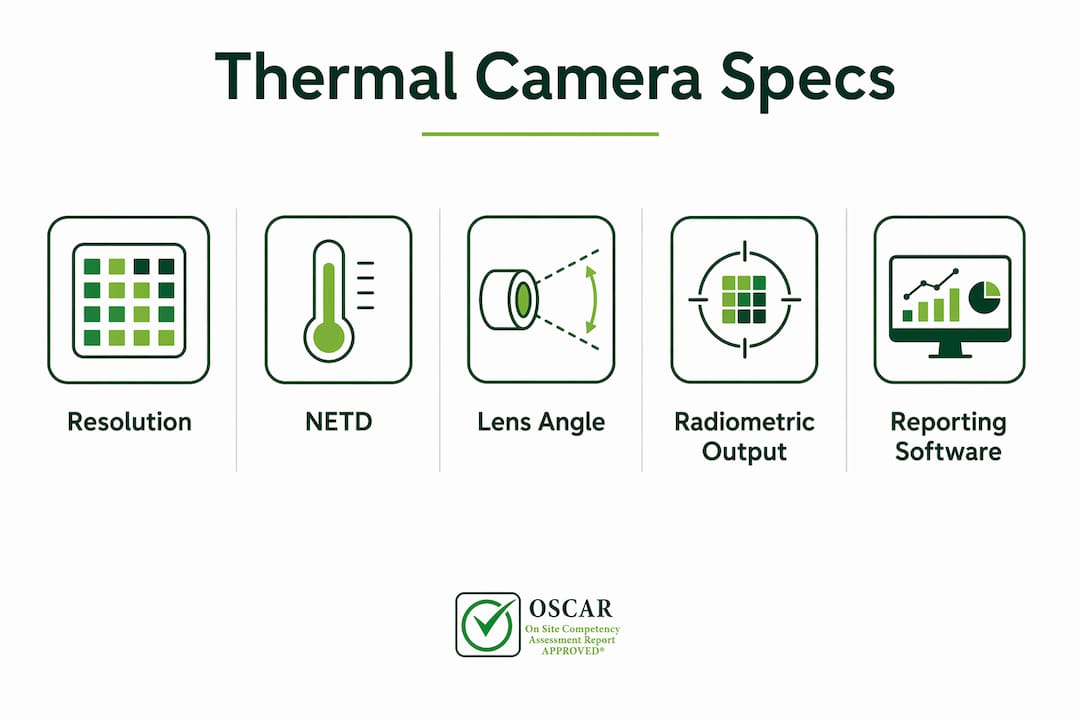
For a professional CWI survey in the UK, you need a thermal camera with a sensor of at least 320×240 pixels and a 42° field of view, radiometric output, and software capable of generating compliant PDF reports. Anything below that threshold produces images that RICS and CIBSE will not accept as professional evidence for insulation condition assessments or Part L compliance.
Three camera classes cover most UK practitioners and homeowners:
- Professional handheld radiometric cameras (Teledyne FLIR E-series, Testo 872s, Fluke TiX501): survey-grade resolution, interchangeable lenses, full radiometric file export, and mature reporting software. The right choice if you’re conducting regular CWI surveys and hold the relevant thermography training.
- Mid-range radiometric handhelds (Hikmicro building-inspection range): competitive 320×240 sensors at lower entry cost, increasingly capable software. Suited to cost-conscious professionals and hire companies.
- Prosumer and occasional-use models (Seek Thermal radiometric handhelds): affordable radiometric imaging for homeowners or infrequent users troubleshooting insulation voids, not for compliance-grade reporting.
Before you buy or hire a camera, the NHBC Foundation cautions that thermal imaging is not a one-click diagnosis. Interpreting anomalies correctly requires building-physics training and borescope verification. OSCAR Onsite’s methodology combines survey-grade thermography with borescope inspection and an independent CWI Condition Inspection Survey, which is the standard required before any extraction decision.
If compliance or extraction may follow, hire an accredited OSCAR Onsite surveyor rather than relying on a camera alone.
| Camera | Resolution | NETD | FOV / lens | Radiometric output | Reporting software | Best for |
|---|---|---|---|---|---|---|
| Teledyne FLIR E86 | — | <30 mK (42°) | 42° interchangeable | Yes (.csq radiometric video) | FLIR Ignite, FLIR Tools+ | Surveyors needing compliance-grade reports and lens flexibility |
| Testo 872s | 320×240 px (640×480 SuperRes) | <50 mK | 42°×30° fixed | Yes | IRSoft PC + Thermography App | Building surveyors wanting integrated humidity monitoring |
| Fluke TiX501 | 640×480 px | Not published | Interchangeable (2× tele) | Yes | SmartView | Professionals needing rugged hardware and UK instrumentation support |
| Hikmicro (building range) | 320×240 px | Varies by model | Fixed and interchangeable options | Yes (select models) | HIKMICRO Analyzer | Cost-conscious professionals and hire fleets |
| Seek Thermal (radiometric) | 320×240 px | Varies by model | Fixed | Yes (select models) | Seek Thermal app | Homeowners and occasional users at lower cost |
Teledyne FLIR sits at the top of most professional shortlists for good reason. The E86’s interchangeable AutoCal lenses, <30 mK NETD on the 42° lens, and real-time radiometric video recording make it the most versatile option for surveyors who move between building types. FLIR Ignite cloud upload and FLIR Tools+ reporting cover the evidence-chain requirements that insurers and compliance bodies expect.
Testo earns its place through measurement precision. The 872s Building Diagnosis Kit ships with a testo 605i thermohygrometer, which lets you log ambient humidity and temperature alongside every thermal image. RICS warns that surveys lacking environmental records carry limited professional validity, so having that data captured automatically is a genuine workflow advantage. The 42°×30° fixed lens matches the RICS/CIBSE recommended field of view exactly.
Fluke appeals to practitioners who already rely on Fluke instrumentation. The TiX501’s 640×480 sensor and rugged build suit contractors who need a camera that doubles across electrical and building-fabric inspections, with a UK support network behind it.
Hikmicro has moved quickly. Entry-level models now meet the 320×240 minimum, and the HIKMICRO Analyzer software handles radiometric file export and PDF reporting. For a hire company equipping multiple surveyors, the lower capital cost per unit is a real consideration.
Seek Thermal occupies a different tier. Radiometric-capable models give homeowners a way to visualise insulation voids without spending thousands, but smartphone attachments and consumer-grade units are not sufficient for rigorous professional surveys. Use Seek Thermal to flag a problem, then commission a proper survey.
Table of Contents
What specs actually matter for CWI surveys
Sensor resolution and lens angle together determine whether you can image a full wall section from a practical working distance inside a UK dwelling. A 320×240 sensor with a 42° lens is recommended for imaging a full wall section from a practical working distance inside a UK dwelling, which suits most domestic rooms. Drop to a 24° lens and you need to stand further back or stitch multiple images, introducing error. NETD below 50 mK is the working threshold for detecting the small temperature differentials typical of partial insulation voids; the Testo 872s at <50 mK and the FLIR E86 at <30 mK both clear it comfortably.
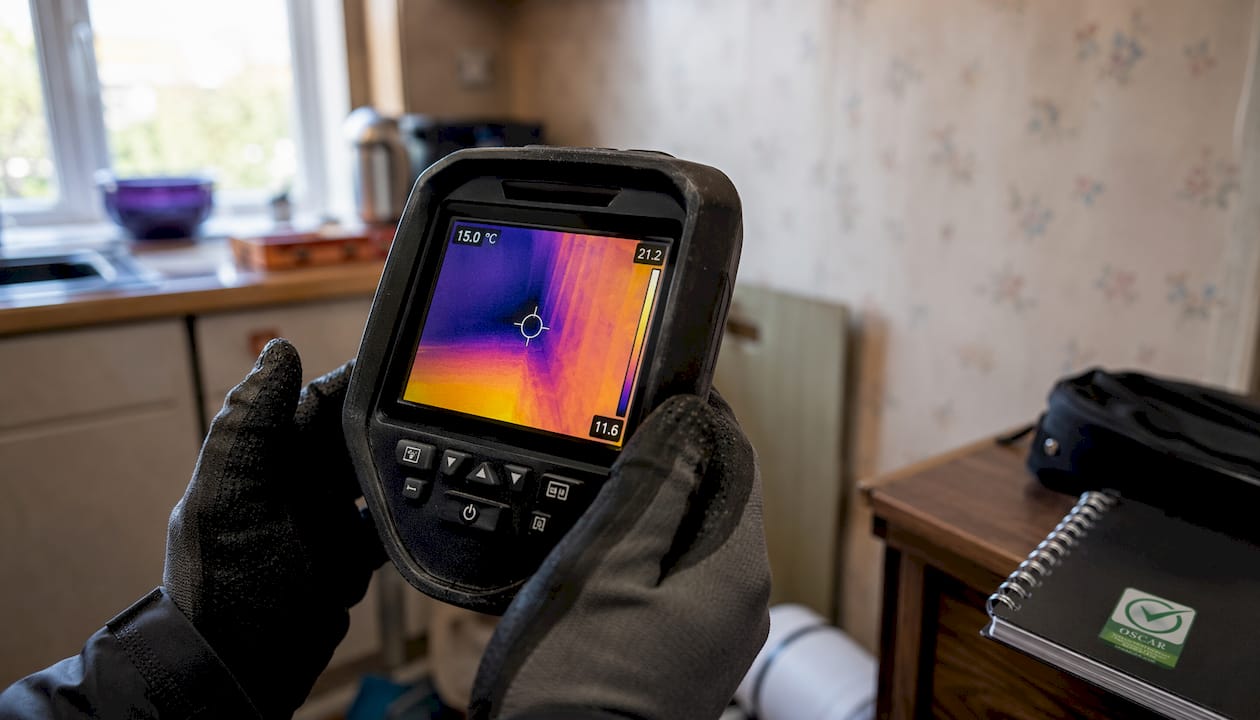
Radiometric output and report-generating software matter as much as raw image quality for professional surveys. A radiometric file preserves every pixel’s temperature data, which means a report can be interrogated after the fact if a dispute arises. Cameras that export only JPEG snapshots cannot provide that audit trail.
Should you buy or hire?
Hiring before buying is a pragmatic route, particularly for homeowners or surveyors who conduct fewer than a handful of CWI surveys per year. Specialist suppliers offer professional-grade camera hire that lets you test reporting workflows before committing capital. Professionals conducting regular surveys will recover the cost of a mid-range camera within a season.
One condition that catches many people out: exterior CWI thermography requires a minimum interior-to-exterior temperature difference of around 10°C to produce reliable results. Summer exterior surveys are largely useless due to solar gain. Interior surveys are less sensitive to this, but the environmental logging requirement remains. A calibrated hygrometer and anemometer are not optional accessories; they are part of the evidence record.
For a broader overview of thermal imaging survey practice in the UK, including what to expect from a professional report, Survey Merchant’s guide covers the process in accessible detail. If you want to understand the specific defects thermography identifies in cavity walls, their CWI problems guide is worth reading before commissioning any survey.
Why an independent OSCAR Onsite survey protects you
A thermal camera, however capable, is only as useful as the person interpreting its output and the process behind the survey. OSCAR Onsite authored the UK’s first NVQ Level 2 in CWI Surveying & Inspection and the NVQ Level 2 in CWI Extraction & Clearance, setting the National Occupational Standards that accredited surveyors work to. The CWI Surveyor Awareness Course is recognised by RICS surveyors, building surveyors, DEAs, retrofit professionals, housing providers, mortgage lenders, and conveyancing solicitors.
The OSCAR methodology runs in a defined sequence: survey-grade thermography with full environmental records, borescope verification of anomalies, an independent written condition report, and extraction only where the evidence supports it. No sales-led extraction. An OSCAR CWI Condition Inspection Survey produces the kind of documented, impartial evidence that insurers, housing associations, and local authorities accept. Where extraction is justified, OSCAR refers to accredited member firms and provides independent Technical Monitoring & Clearance Certification on completion.
Book an independent CWI Condition Inspection Survey with OSCAR Onsite, or contact the team for accredited member referrals across the UK.
Key takeaways
For a compliant UK CWI survey, the camera’s sensor, lens angle, NETD, and reporting software must all meet professional thresholds — no single specification is sufficient on its own.
| Point | Details |
|---|---|
| Minimum spec for CWI surveys | RICS and CIBSE require at least 320×240 pixels and a 42° lens for professional building thermography. |
| NETD threshold | A sensitivity below 50 mK is the working threshold for detecting partial insulation voids in UK dwellings. |
| Environmental records are mandatory | RICS warns that surveys without logged humidity and wind data carry limited professional validity. |
| Hire before you buy | Hiring a professional-grade camera lets you test workflows before committing capital. |
| OSCAR Onsite methodology | An independent OSCAR CWI Condition Inspection Survey combines thermography, borescope verification, and a compliant report before any extraction decision. |