TL;DR:
- Cavity wall extraction in UK homes typically takes one to several days, depending on property size and complexity. Independent surveys are essential to confirm whether extraction is necessary and to accurately estimate the full program, including drying and certification. Proper planning, using accredited contractors and independent assessments, prevents unnecessary disruption, cost overruns, and recurring damp issues.
For most UK homes, the cavity wall extraction timescale typically runs from a couple of working days for a standard three-bed semi, increasing to several days for larger or more complex properties. That figure covers active extraction only. Factor in the pre-work condition survey, a drying period that can last multiple weeks, and independent clearance certification, making the full programme from first appointment to re-insulation span several weeks. Before you book any extraction, the single most important step is an independent CWI Condition Inspection Survey to confirm extraction is actually needed.
At a glance:
- Small flat or 1-bed property: half a day to one full day
- 3-bed semi (typical case): one to two working days
- 4-bed detached or complex property: three to five days or more
- Rigid foam or UF spray foam: add extra days; full removal is not always achievable
- Drying window before re-insulation: two to eight weeks depending on season and wall condition
- Clearance certification: an additional 30–60 minutes on-site, plus report turnaround
The mandatory trust signals to look for on any contractor’s quote: PAS 2030 compliance, TrustMark registration, CIGA guarantee eligibility, and ECO4 scheme checks where applicable.
Table of Contents
- What cavity wall extraction is and why the timescale matters
- How long does the full extraction process take, stage by stage?
- What factors commonly extend or shorten the extraction duration?
- How is cavity wall extraction actually carried out?
- How does the timescale affect cost, and what grants are available?
- When can you fit new insulation after extraction?
- The OSCAR Onsite recommended pathway for extraction and clearance
- Key takeaways
- Why independent surveying is the decision that changes everything
- How OSCAR Onsite can help you plan and book the right work
- Useful sources and further reading
What cavity wall extraction is and why the timescale matters
Cavity wall extraction is the professional removal of existing cavity wall insulation (CWI) from the air gap between a property’s inner and outer leaf walls, followed by clearance of any residual debris. It is distinct from a simple repair: the goal is to restore the cavity to a clean, breathable condition so that moisture can drain and air can circulate freely.
Getting the timescale right matters for three practical reasons. First, disruption: extraction involves drilling access holes in the external render or brickwork, running vacuum or mechanical equipment, and making good afterwards. Knowing the duration lets you plan around it. Second, sequencing: drying time after extraction directly controls when re-insulation can safely begin, and underestimating it is one of the most common causes of repeat damp problems. Third, cost: labour, scaffold hire, and specialist equipment are all time-dependent, so an accurate programme prevents budget surprises.
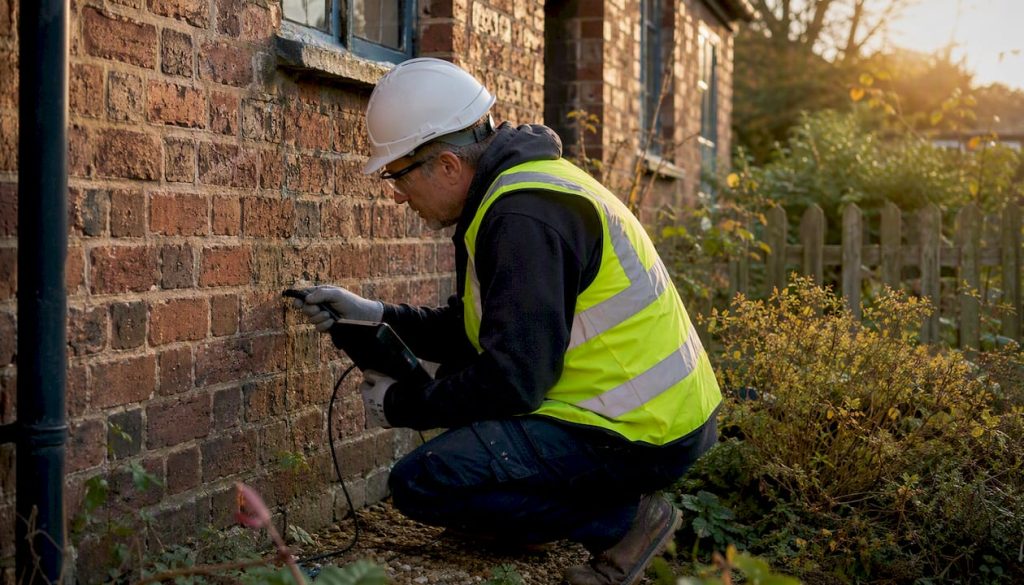
Independent condition surveys are the starting point for an accurate timescale. A surveyor using a borescope (a small camera inserted through a drilled hole) and thermal imaging can assess insulation type, saturation level, cavity condition, and wall-tie integrity in a single visit lasting roughly two to three hours for an average property. That information determines whether extraction is warranted at all, and if so, how long it will take.
- Thermal imaging: — identifies cold bridging, moisture patterns, and insulation voids
How long does the full extraction process take, stage by stage?
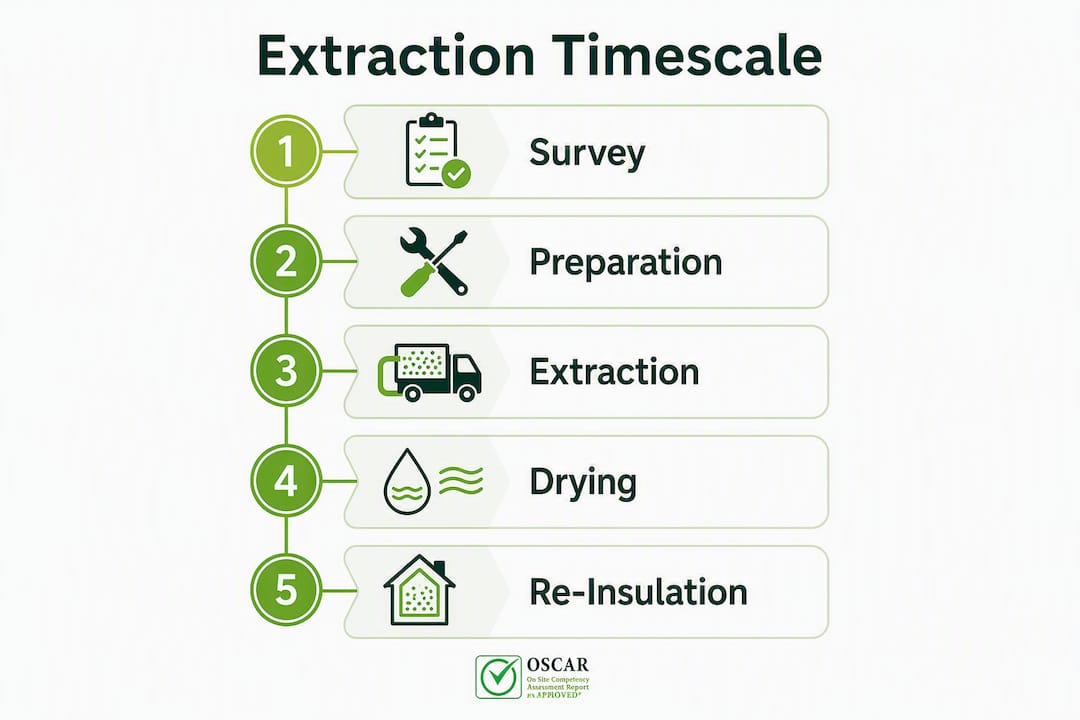
The cavity wall extraction process is not a single event but a programme with various stages, each taking variable amounts of time, including condition inspection surveys, scheduling lead time, active extraction, clearance inspections, drying periods lasting several weeks, certification, and eventual re-insulation when appropriate.
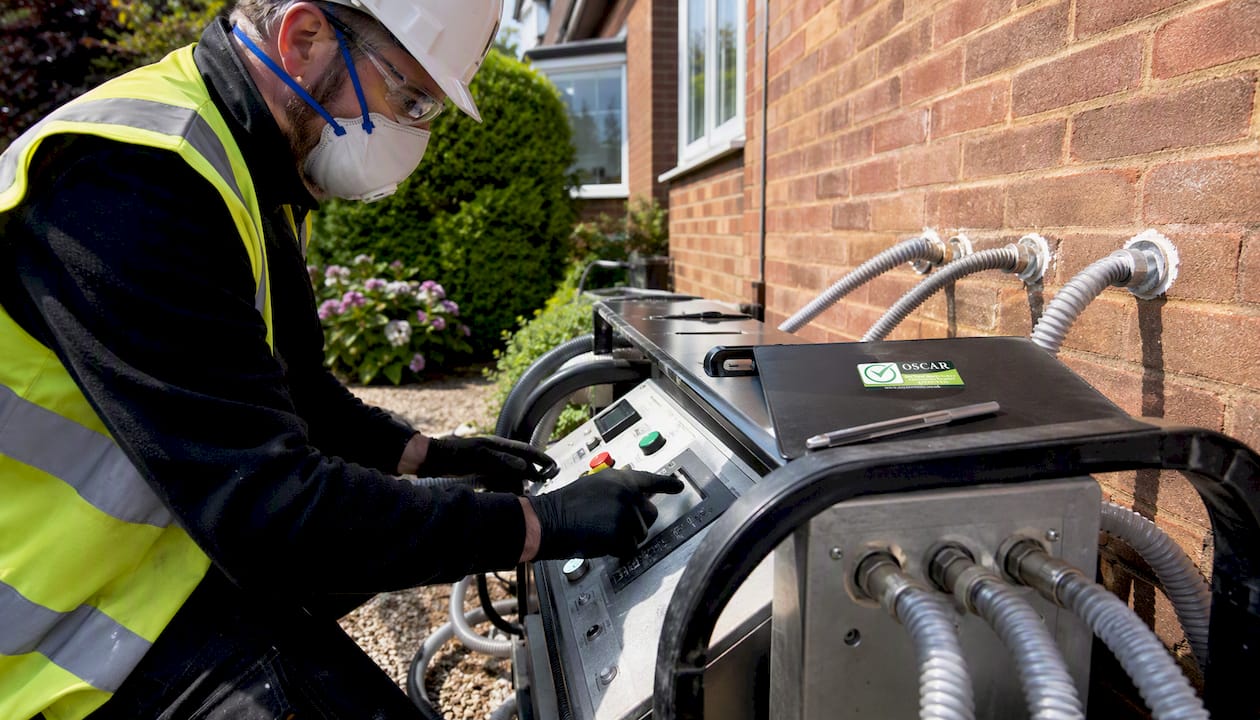
Active extraction typically runs at four to six hours per working day, with the remainder of each day spent on setup, site protection, and inspection. That is why a 3-bed semi rarely finishes in a single morning: even a straightforward job needs time for access-hole preparation, equipment positioning, and making good.
The drying window is where most homeowners underestimate the overall programme. Drying time before re-insulation commonly ranges from two to eight weeks, with the longer end applying to winter jobs, coastal properties, or walls that were heavily saturated. Skipping or shortening this stage and proceeding to re-insulation too early is a well-documented cause of recurring damp.
What factors commonly extend or shorten the extraction duration?
Several variables push the cavity wall extraction duration in either direction, and understanding them helps you evaluate contractor quotes and spot unrealistic promises.
- Insulation material: Polystyrene beads and blown mineral fibre are the fastest to remove, with vacuum extraction achieving high removal rates. Rigid foam and UF spray foam require mechanical cutting and are significantly slower; full removal is not always possible without structural damage.
- Cavity condition and damp: Wet or waterlogged insulation slows the physical extraction and substantially increases drying time afterwards. Remedial repairs to address moisture ingress can add days or weeks to the overall programme.
- Property layout and access: Narrow side passages, conservatory extensions, or restricted roof overhangs all limit where scaffolding or access equipment can be positioned, adding time.
- Number of access holes: More holes mean more extraction points and more making-good work. Complex cavity configurations require additional drilling locations.
- Weather and exposure: Heavy rain and coastal exposure slow extraction and drying, particularly for properties in the South West, Wales, or Scotland. A job quoted for two days in summer may take four in a wet November.
- Regulatory and documentation steps: Confirming CIGA guarantee eligibility, TrustMark registration checks, and PAS 2030 methodology compliance all take time before and after the physical work.
Pro Tip: When comparing quotes, ask each contractor to break down their price by stage: extraction, drying allowance, clearance inspection, and certification. A quote that bundles everything into a single day-rate with no mention of drying or certification is almost certainly incomplete.
How is cavity wall extraction actually carried out?
Understanding the method explains why certain materials take longer and why the daily workflow rarely looks like a full eight hours of drilling.
- Pre-work preparation: The surveyor’s report identifies access-hole locations, typically at regular intervals along mortar joints. Internal surfaces near windows and sills are protected, and any scaffolding or access equipment is erected.
- Access hole drilling: Holes are drilled through the external leaf at the specified locations. For a 3-bed semi, this commonly means 20–40 holes depending on wall area and insulation type.
- Vacuum extraction (beads and fibre): A high-powered extraction unit is connected to each hole in sequence. Loose-fill materials are drawn out and collected in sealed bags for disposal. This is the fastest method.
- Mechanical removal (rigid foam): Where UF or spray foam is present, operatives use cutting tools to break up the material before extraction. This is slower, generates more debris, and carries a higher risk of leaving residues.
- Cavity inspection: Once extraction is complete, a borescope is used to verify clearance. This adds roughly 30–60 minutes to the final day’s schedule.
- Making good: Access holes are repointed or rendered to match the existing finish. This is often the most visible part of the job and requires care to avoid aesthetic mismatches.
- Waste disposal: Extracted insulation, particularly if contaminated with moisture or biological growth, must be disposed of correctly. Asbestos checks are required for properties built before the mid-1980s where any doubt exists about cavity fill composition.
Trust signals to verify on any contractor’s documentation before work begins:
- TrustMark registration number
- PAS 2030 methodology statement
- CIGA eligibility confirmation
- Evidence of NVQ-qualified operatives (OSCAR Onsite’s NVQ Level 2 in Cavity Wall Extraction & Clearance is the national benchmark qualification)
How does the timescale affect cost, and what grants are available?
Duration and cost are directly linked. Labour is charged by the day, scaffold hire accumulates, and specialist equipment has a daily rate. A job that runs to five days instead of two does not simply cost more in proportion; it often triggers additional charges for extended scaffold hire, repeat site visits, and remedial works.
- Typical cost range for a 3-bed semi: Published guides place whole-house extraction in the low thousands of pounds for standard bead or fibre removal. Foam removal is significantly more expensive and slower, often doubling or trebling the base cost. For detailed UK-specific figures, OSCAR Onsite’s cavity wall insulation removal cost guide sets out the key cost drivers.
- What is commonly excluded from initial quotes: Drying period monitoring, clearance certification, remedial repairs to brickwork or render, and scaffold hire beyond the quoted extraction days. Always ask for these to be itemised.
- ECO4: The UK government’s ECO4 scheme funds energy efficiency improvements for eligible households, including insulation work. ECO4 does not typically fund extraction directly, but it may fund replacement insulation after extraction if the property and household meet eligibility criteria. Check with your local authority or an approved ECO4 installer.
- CIGA guarantees: The Cavity Insulation Guarantee Agency (CIGA) issues guarantees for qualifying installations. If your original insulation was CIGA-guaranteed and has failed, the guarantee may cover remediation costs. Check your property’s CIGA documentation before commissioning extraction at your own expense.
- TrustMark assurance: TrustMark-registered contractors work to government-endorsed standards. Using a TrustMark firm is a condition of some grant-funded work and provides a route to dispute resolution if problems arise.
When can you fit new insulation after extraction?
Re-insulation is not a decision to rush. Fitting new insulation into a cavity that is still damp, or that has unresolved structural defects, simply recreates the original problem.
Before any re-insulation, the following conditions must be met:
- The cavity is visually clear and verified by borescope inspection
- Wall moisture readings are within acceptable limits for the chosen insulation type
- Any identified defects (cracked mortar, failed wall ties, leaking gutters, damaged render) have been repaired
- An independent clearance certificate has been issued confirming the cavity is ready
- The contractor’s re-insulation proposal references PAS 2030 compliance and CIGA eligibility
The waiting period before re-insulation typically runs from two weeks in mild, dry summer conditions to eight weeks or more for properties with heavily saturated walls or winter extraction. Wet insulation and moisture ingress extend both the drying window and the remedial repair schedule considerably.
Coordinating the sequencing of contractors is where many homeowners lose time. A practical approach:
- Book the independent condition survey first and receive the written report.
- Use the report to brief extraction contractors and obtain like-for-like quotes.
- Schedule remedial repairs (pointing, guttering, render) to run concurrently with the drying period where possible.
- Commission an independent drying verification visit before re-insulation begins.
- Obtain the clearance certificate and pass it to your re-insulation contractor as a condition of starting work.
The OSCAR Onsite recommended pathway for extraction and clearance
The single most important thing to do before any extraction decision is commission an independent condition inspection. Not a free survey from a contractor who also sells extraction. An independent one.
OSCAR Onsite’s recommended pathway:
- Step 1 — Independent survey: Book an OSCAR CWI Condition Inspection Survey. The survey uses borescope and thermal imaging to assess insulation type, saturation, wall-tie condition, and moisture ingress. The written report tells you whether extraction is genuinely needed or whether another defect (a leaking gutter, failed pointing, or cracked render) is the actual cause of your damp problem.
- Step 2 — Accredited extraction: If extraction is justified, use an OSCAR Onsite Accredited Member Firm. These firms are trained to the NVQ Level 2 standard OSCAR Onsite authored, and they operate under defined technical and ethical standards verified through ongoing audits.
- Step 3 — Technical monitoring: During extraction, independent technical monitoring verifies that the work is being carried out correctly and that the cavity is being cleared to the required standard.
- Step 4 — Clearance certification: Once the cavity is dry and verified, an independent clearance certificate is issued. This document is your evidence that the cavity is ready for re-insulation and protects you if disputes arise later.
OSCAR Onsite’s alignment with PAS 2030:2023, TrustMark requirements, and CIGA processes means the pathway meets the standards required for grant-funded work and insurance-backed guarantees.
Independent condition surveys consistently show that a significant proportion of properties referred for extraction have other building defects driving the damp, not insulation failure. An independent survey prevents unnecessary extraction and the cost and disruption that comes with it.
Pro Tip: When commissioning an independent survey, ask for the report to include: insulation type and estimated fill rate, moisture readings at multiple points, wall-tie condition assessment, and a clear recommendation on whether extraction is justified. If the report does not include all four, it is not a complete condition inspection.
Key takeaways
The full cavity wall extraction timescale, from independent survey to clearance certification, typically spans several weeks, even when the physical extraction itself takes only one or two days.
| Point | Details |
|---|---|
| Extraction duration by size | Small flat: half to one day; 3-bed semi: one to two days; large or complex property: three to five days or more. |
| Drying window before re-insulation | Allow two to eight weeks depending on wall saturation, season, and whether remedial repairs are needed. |
| Survey first, always | An independent condition inspection confirms whether extraction is genuinely needed and prevents sales-led removal. |
| Clearance certification matters | An independent clearance certificate is required before re-insulation and protects you against future disputes. |
| OSCAR Onsite pathway | Book an OSCAR CWI Condition Inspection Survey, use an accredited member firm for extraction, and obtain independent clearance certification before re-insulation. |
Why independent surveying is the decision that changes everything
The industry has a well-documented problem with sales-led extraction. A contractor who profits from extraction has a commercial incentive to recommend it, even when a leaking downpipe or failed pointing is the actual cause of the damp. The consequences for homeowners are real: unnecessary disruption, significant cost, and a cavity that develops the same problems again within a few years because the root cause was never addressed.
What I see repeatedly in this sector is that the timescale question, how long will it take, is the wrong first question. The right first question is whether extraction is needed at all. Building pathology matters here. Damp in a cavity wall property has multiple possible causes, and insulation failure is only one of them. A borescope and thermal imaging survey, conducted independently, separates the genuine cases from the ones that need a roofer or a pointing contractor, not an extraction team.
OSCAR Onsite exists precisely because the industry needed a body that would set standards rather than sell services. Authoring the NVQ Level 2 qualifications in CWI Surveying & Inspection and CWI Extraction & Clearance was not a commercial exercise; it was an attempt to create a professional baseline that the sector had never had. Those qualifications are now the national benchmark. The firms trained to that standard are the ones worth commissioning.
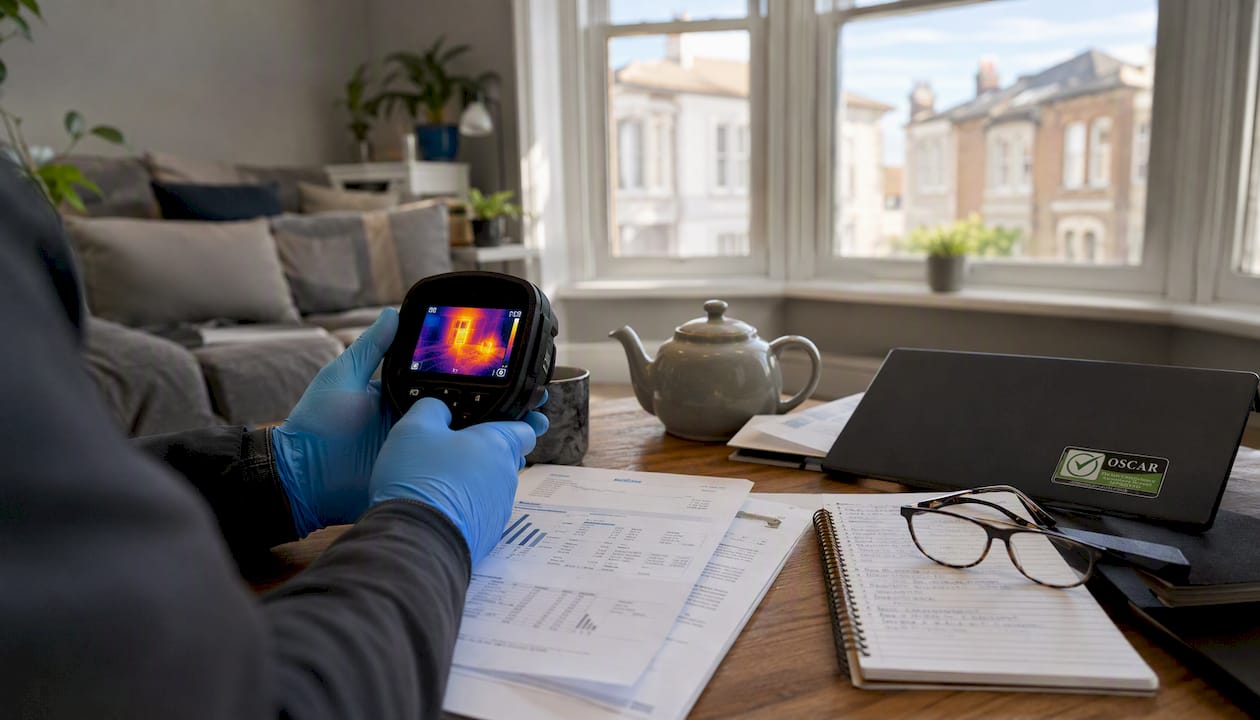
If you take one thing from this article: book an independent survey before you speak to an extraction contractor. The survey will either confirm the work is needed and give you a solid brief for quotes, or it will save you thousands of pounds by identifying a different problem entirely.
How OSCAR Onsite can help you plan and book the right work
The most common mistake homeowners make is contacting an extraction contractor before they have an independent assessment in hand. OSCAR Onsite reverses that sequence deliberately.
Start with an OSCAR CWI Condition Inspection Survey: a borescope and thermal imaging assessment that produces a written report confirming whether extraction is justified, what material is present, and what the cavity condition is. That report becomes your brief for extraction contractors and your protection against unnecessary work. If extraction is confirmed, OSCAR Onsite refers you to an accredited member firm trained to NVQ Level 2 standard, with independent technical monitoring and a clearance certificate issued on completion. The full pathway, survey through to certified clearance, is available across the UK. To book your condition inspection or find an accredited extraction firm, visit OSCAR Onsite’s extraction service page or book the survey directly.
Useful sources and further reading
- OSCAR Onsite CWI Condition Inspection Survey — book an independent survey before any extraction decision
- OSCAR Onsite Cavity Wall Insulation Extraction service — accredited extraction referral and service detail
- OSCAR Onsite Clearance Certification — independent post-extraction clearance certificates
- OSCAR Onsite cavity wall insulation removal cost guide — UK cost drivers and typical ranges
- ConstructionToday.co.uk: how to remove cavity wall insulation safely — industry overview of removal methods and timescales
- Checkatrade: cavity wall insulation removal cost guide — independent cost benchmarks and duration guidance
- BookaBuilderUK: cavity wall insulation removal cost 2026 — drying time ranges, weather effects, and cost variance by condition