
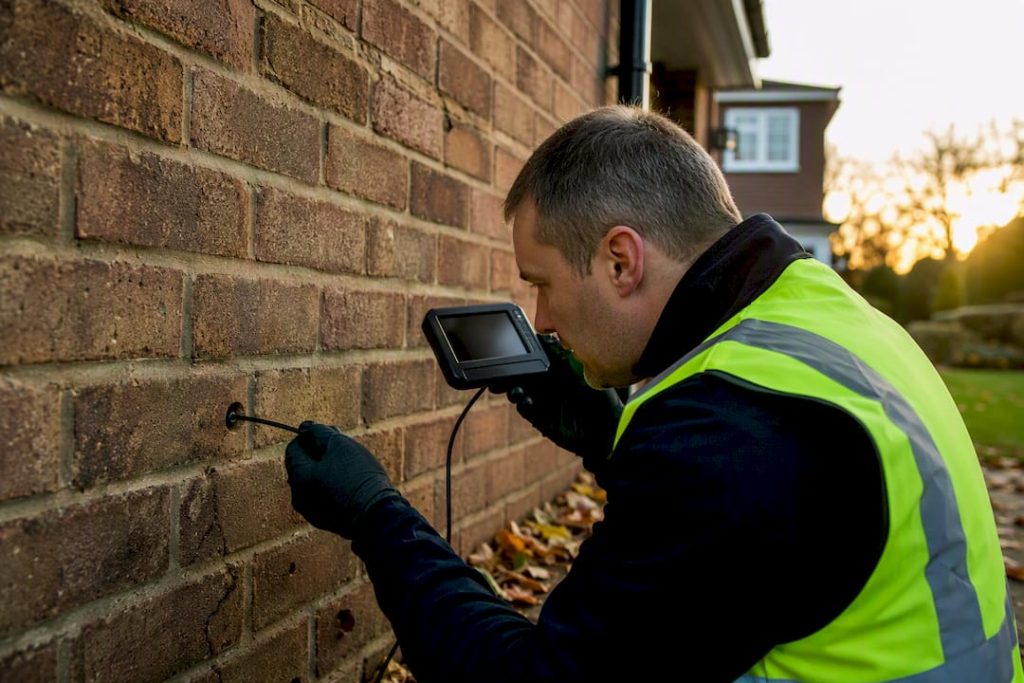
Yes, an independent report can support or defend a UK damp claim, but only if it meets a specific bar: genuine independence and compliance with CPR Part 35, the civil procedure rule governing expert evidence in court. A report written by a surveyor with a commercial stake in the outcome, or one that skips its own limitations, carries little weight before a judge, adjudicator or the Housing Ombudsman.
Three things separate a claim-ready report from a routine damp survey. First, a signed statement of truth confirming the expert’s duty is to the court, not to whoever is paying the invoice. Second, a documented methodology section that states what was tested, what wasn’t, and why. Third, dated photographic evidence paired with logged moisture readings, ideally cross-referenced against the Property Care Association’s Code of Practice on damp inspection standards.
Without these three elements, a report is closer to a sales quote than evidence. That distinction runs through the rest of this guide:
- A statement of truth under CPR Part 35, confirming impartiality and duty to the court
- A stated methodology with explicit limitations, not just a diagnosis
- Photographic and moisture-reading evidence with dates, locations and instrument details
Specialist damp surveys typically run £150 to £450 and take one to three hours on site, but a genuine Part 35 expert report costs more and takes longer, because it has to survive cross-examination, not just a homeowner’s read-through.
Key Takeaways
An independent damp report only supports a claim when it is genuinely impartial, CPR Part 35 compliant, and built on documented methodology rather than assumption.
| Point | Details |
|---|---|
| Independence is non-negotiable | A report with a commercial stake in the remedial outcome risks rejection by courts or adjudicators. |
| CPR Part 35 sets the standard | Any report heading towards litigation needs a signed statement of truth and stated duty to the court. |
| Evidence beats assertion | Dated photos, logged moisture readings and a clear methodology outweigh a confident-sounding conclusion. |
| Costs vary by purpose | Standard surveys run roughly £150 to £450; formal expert reports for litigation typically cost more. |
| OSCAR Onsite covers cavity-specific cases | Where CWI is involved, OSCAR Onsite provides independent, NVQ and PAS 2030:2023 aligned inspections before any extraction is recommended. |
This article is general information, not a substitute for advice from a qualified lawyer. Consult a qualified legal professional about your own circumstances before acting on anything here.
Table of Contents
- What makes an independent report for a damp claim different from a standard survey?
- Who can produce a report admissible in UK proceedings?
- What must a robust independent damp report contain?
- How much does an independent damp report cost and how long does it take?
- How do you instruct an independent report for a damp claim?
- What evidence do courts and adjudicators actually expect?
- What red flags suggest a report is weak or biased?
- How does OSCAR Onsite support evidence-grade cavity wall inspections?
- Why the “quick fix” instinct undermines most damp claims
- Get an independent CWI inspection report from OSCAR Onsite
- Sources
What makes an independent report for a damp claim different from a standard survey?
A standard damp survey tells you what a surveyor found. A legal-grade report tells the court why it can trust what the surveyor found, and that difference is entirely procedural.
CPR Part 35 governs expert evidence in civil proceedings across England and Wales. Any expert instructed for litigation, or for a claim likely to reach litigation, must confirm their overriding duty is to the court rather than to the instructing party, and must state clearly which opinions are their own professional judgement versus assumptions or instructions from a client. This duty is embedded through a statement of truth, a formal declaration signed by the expert confirming the report’s contents are true to the best of their knowledge.
Independence is the whole point of the exercise. A report from a contractor who stands to win the remedial work if they diagnose a serious problem is not automatically wrong, but it is compromised in a way courts are trained to spot. Judges and adjudicators are wary of reports that read like advocacy for one side’s case rather than a neutral technical assessment. An expert’s duty runs to the court, not the party footing the bill, and any report that blurs that line risks being excluded from evidence entirely.
That’s why a free survey from an installer offering to fix what they find is rarely appropriate for a formal claim. It has its place for early diagnosis on a low-stakes issue, but for:
- Disrepair claims heading towards court or the Housing Ombudsman
- Disputes where liability or causation is contested
- Cases involving significant remedial costs or health impacts
you need a report from someone with no financial interest in the remedial outcome.
Who can produce a report admissible in UK proceedings?
Not every surveyor who inspects damp is qualified to give evidence a court will accept. The credentials that matter are ones that signal both technical competence and a professional obligation to impartiality.
Look for a surveyor holding MRICS or FRICS status (Member or Fellow of the Royal Institution of Chartered Surveyors), which carries a professional code of conduct and disciplinary framework. Membership of the Property Care Association, or qualifications such as CSRT (Certificated Surveyor in Remedial Treatment) or CSSW (Certificated Surveyor in Structural Waterproofing), signals specific damp and timber diagnostic training rather than general building surveying. Following the PCA’s methodology, or holding these credentials, reduces the risk of a premature or unsupported diagnosis, such as calling something “rising damp” without ruling out condensation or penetrating damp first.
Some cases need more than a surveyor’s visual and instrument-based assessment. If causation is genuinely disputed, or if structural movement is suspected alongside moisture ingress, a structural engineer may need to be brought in separately, and laboratory analysis of plaster or masonry samples may be required to confirm salt contamination rather than relying on a meter reading alone.
Before instructing anyone, check:
- Professional indemnity insurance current and sufficient for the claim value
- No prior commercial relationship with the landlord, agent or contractor involved
- Recent CPD relevant to damp diagnosis, not just general surveying
- Willingness to state their duty to the court in writing before you commission the work
What must a robust independent damp report contain?
A report built for a claim needs far more structure than a homeowner’s damp survey. Courts, adjudicators and the Housing Ombudsman all expect a document that stands on its own, without the expert present to explain gaps.
The report should follow roughly this sequence:
- Executive summary stating the property, instructing party, purpose of the inspection and headline findings.
- Scope and methodology, naming exactly what was inspected, what equipment was used, and the conditions on the day (weather, heating, occupancy).
- Limitations, stated honestly: areas not accessed, tests not carried out, and why.
- Photographic evidence, each image dated, captioned and tied to a specific location in the property.
- Moisture reading logs, recording the meter type, calibration status, and readings at multiple points, not a single spot check.
- Thermal imaging results, explained correctly as a surface temperature record that can indicate patterns consistent with moisture or heat loss. Thermal imaging does not see inside a cavity wall directly, and a competent report will say so rather than imply otherwise.
- Laboratory results, if samples were taken, with chain-of-custody notes.
- Causation analysis, linking the observed physical evidence to a moisture mechanism (condensation, penetrating damp, rising damp, plumbing failure) rather than asserting a cause from symptoms alone.
- Remedial specification and cost estimate, where remediation is genuinely warranted by the evidence.
- Legal declarations: statement of truth, conflict of interest declaration, list of documents reviewed, and the inspector’s signature and credentials.
One template for building surveyor expert reports in disrepair cases confirms this structure is standard practice for CPR-compliant reporting, covering inspection details, documents reviewed, methodology, evidence, causation, remedy and cost.
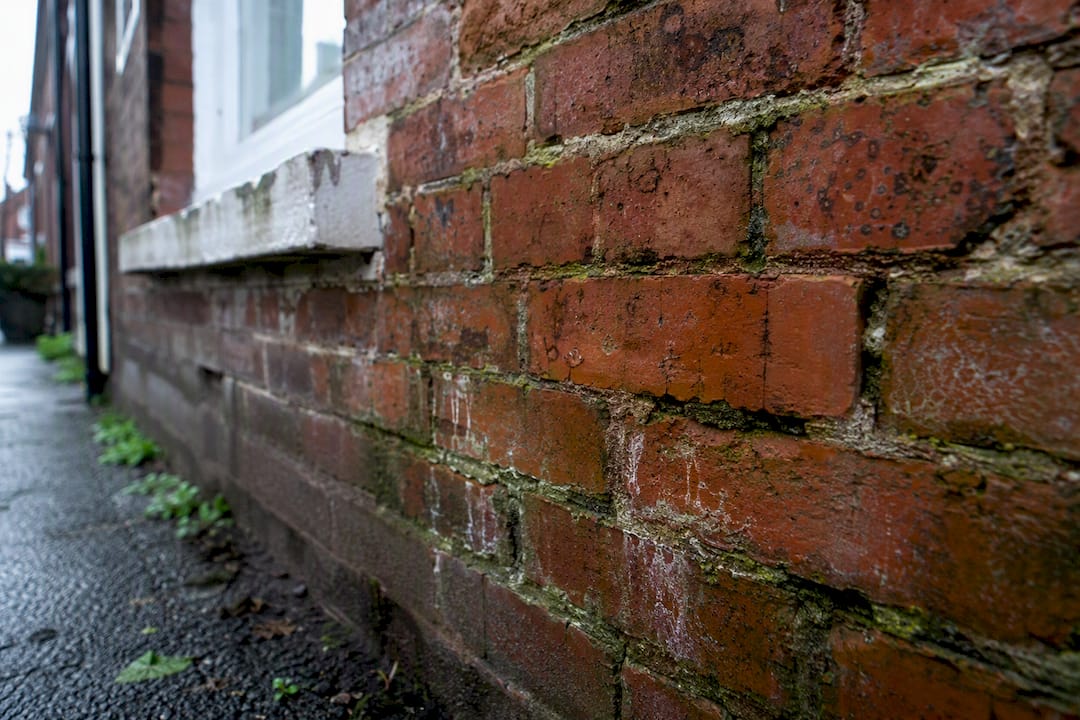
The distinction between observation and diagnosis matters more than most reports acknowledge. A damp stain and a raised meter reading are observations. “Rising damp” is a diagnosis, and a properly cautious report will flag when the evidence supports only a provisional conclusion pending further testing, rather than presenting a guess as certainty.
Pro Tip: Ask any surveyor upfront whether their report will state a diagnostic confidence level for each finding. A report that says “consistent with condensation, pending further monitoring” is more useful in a dispute than one that states a firm cause it can’t actually prove.
How much does an independent damp report cost and how long does it take?
Budget for two different price tiers, because a standard damp survey and a litigation-ready expert report are not the same product.
A specialist damp survey from a PCA member or chartered surveyor typically costs £150 to £450 and takes one to three hours on site. A formal Part 35 expert report, built to withstand cross-examination and cover causation, remedy and cost analysis, commonly runs from around £350 up to £1,200 or more, depending on the property’s size, the complexity of the dispute and how much invasive testing is needed.
Several factors push costs higher:
- Invasive sampling and laboratory analysis of plaster, masonry or timber
- Specialist access equipment for lofts, cellars or difficult cavity locations
- Listed building constraints requiring additional care and consultation
- A second inspection if the first report is challenged or a joint expert is appointed
Turnaround for the written report itself usually takes one to three weeks after the site visit, longer if lab results are pending. If both parties in a dispute agree to instruct a single joint expert rather than each commissioning their own, that can save cost overall but adds time to agree scope and instructions before the inspection even begins.
How do you instruct an independent report for a damp claim?
Getting a useful report starts with a clear brief, not a phone call asking someone to “come and have a look.”
- State the purpose plainly. Say whether the report is to support a claim, defend against one, or simply establish the facts before deciding. If litigation is a realistic possibility, say so, because it changes which standard the expert needs to meet.
- Define scope. List every room or area of concern, not just the worst-affected one, since a whole-property approach is what the PCA Code of Practice expects.
- Provide documents in advance. Tenancy start date, prior repair correspondence, any earlier survey reports, invoices for previous remedial work and photographs already taken.
- Agree access arrangements, including any areas that may be locked, boarded or otherwise restricted.
- Agree deliverables in writing: photographic standard, moisture log format, whether lab sampling is included, and the delivery timescale.
- Confirm payment terms before the inspection, so cost disputes don’t cloud the report’s independence later.
If a dispute is heading towards court, ask explicitly whether the expert will provide a Part 35 statement of truth and confirm they understand their duty runs to the court rather than to you as the instructing party. A specialist CWI condition inspection survey follows the same principle: scope, methodology and limitations are agreed before the visit, not improvised on the day.
Pro Tip: Send your brief in writing, even for a straightforward homeowner survey. A one-paragraph email listing rooms of concern, access details and what you need from the report avoids costly follow-up visits later.
What evidence do courts and adjudicators actually expect?
A strong independent report works best sitting inside a wider evidence bundle, not standing alone. Shelter’s guidance on damp and mould disrepair claims makes clear that courts and the pre-action protocol expect documented evidence built up over time, not a single snapshot.
Gather and preserve:
- Dated photographs and videos showing progression of the problem, not just the worst moment
- Every written exchange with the landlord or agent, including dates of reported issues
- Repair invoices and any previous survey or contractor reports, even flawed ones
- Environmental health inspection reports from the local council, where these exist
- Medical letters if damp or mould has affected a resident’s health
Moisture readings and lab results need clear labelling: date, location, instrument or lab reference, and who took the reading. Where physical samples were sent for testing, keep a note of who collected them, when, and how they were transported, since a broken chain of custody can undermine otherwise sound results.
| Point | Details |
|---|---|
| Photographic record | Date and caption every image; a single undated photo carries little evidential weight. |
| Correspondence trail | Keep every landlord or agent email showing when the issue was first reported. |
| Independent reports | File the survey or expert report alongside invoices and council inspections, not separately. |
Organise everything into a single folder before handing it to a solicitor or submitting it to the Housing Ombudsman, which expects landlords to have engaged independent expertise where the situation warrants it.
What red flags suggest a report is weak or biased?
A poorly built report is often obvious once you know what to look for, and spotting it early can save a claim from collapsing later.
Watch for:
- No stated methodology, just a conclusion
- A single moisture meter reading used to justify a whole-property diagnosis
- An immediate sales quote for remedial work bundled with the “survey”
- No dated photographs, or images with no location reference
- A surveyor employed by, or commercially tied to, the installer or contractor involved
If a report falls short, request clarification or a factual correction in writing before assuming it’s unsalvageable. Many surveyors will amend an unclear section or add missing detail on request. Where the disagreement is substantive, a second Part 35 expert opinion may be necessary, though this adds cost and time and works best when both parties agree to a joint expert rather than dueling reports.
Pro Tip: Document your objections to a weak report in writing straight away, and save every version. If the dispute escalates, a clear paper trail showing you flagged concerns early strengthens your position considerably.
How does OSCAR Onsite support evidence-grade cavity wall inspections?
Where damp is linked to cavity wall insulation, the diagnostic task is more specialised than a general damp survey. OSCAR Onsite authored the UK’s Level 2 NVQ Diplomas in Cavity Wall Insulation Surveying & Inspection and in Extraction & Clearance, the qualifications that now underpin technical competence standards for CWI professionals nationally.
Inspections carried out to this standard combine borescope examination of the cavity with thermal imaging used as a surface indicator, never as a direct view inside the wall itself, alongside recorded moisture readings taken in context. Findings are assessed against PAS 2030:2023 and BS 8104, the frameworks that govern installation and performance standards for cavity wall insulation in retrofit work, without overstating what any single technique can confirm on its own.
Extraction should never be the first recommendation. The correct sequence is independent assessment of cause and condition, an evidence-led recommendation, competent remediation only where warranted, and independent post-remediation inspection to confirm the work was done properly.
Homeowners, landlords or legal teams dealing with a damp claim involving cavity walls should consider an independent CWI condition inspection survey before any extraction work is agreed, so the report stands on documented evidence rather than assumption. Where ventilation is a contributing factor, understanding the role of attic ventilation in home health can also help explain moisture patterns that aren’t cavity-related at all.
Why the “quick fix” instinct undermines most damp claims
Most damp disputes go wrong at the very first step, when someone accepts a free survey from a contractor who benefits financially from finding a problem worth fixing. It’s an understandable shortcut. It’s also the single biggest reason otherwise legitimate claims collapse under scrutiny.
The conventional advice tends to focus on getting “a survey” done quickly, as if any report will do. It won’t. A report that skips its own limitations, offers one meter reading as proof of a whole-house diagnosis, or bundles a sales quote with the findings isn’t weak evidence, it’s often no evidence at all once challenged.
What the research here actually supports is a staged approach: non-invasive diagnostic assessment first, invasive testing only where the non-invasive evidence genuinely warrants it. That sequence protects the property from unnecessary destructive work and protects the claim from a challenge on proportionality grounds. If you take one thing from this guide, prioritise independence and a stated methodology over speed. A report you can trust in six months matters more than one you got by Friday.
— Alan
Get an independent CWI inspection report from OSCAR Onsite
If cavity wall insulation is part of the damp picture, OSCAR Onsite is the independent route to evidence you can actually rely on, rather than a diagnosis from whoever wants the remedial contract afterwards. Our surveys follow the same principle running through this entire guide: documented methodology, stated limitations, and a report built on what was actually found, not what’s convenient to conclude.
OSCAR Onsite authored the UK’s Level 2 NVQ Diplomas in CWI Surveying & Inspection and Extraction & Clearance, and applies PAS 2030:2023 and BS 8104 standards throughout every inspection. That means a CWI condition inspection survey gives you borescope and thermal imaging evidence interpreted correctly, with clear separation between observation and diagnosis, and no recommendation for extraction until cause and condition have been independently established.
If you’re preparing or defending a damp claim involving cavity walls, request a brief with your property details, access arrangements and any existing correspondence or prior reports, and OSCAR Onsite will scope an inspection to match what your claim actually needs.
Sources
Recommended
- CWI Condition Inspection Survey – Oscar Onsite
- Wet cavity insulation removal: when to extract and who to call
- Cavity wall insulation causing condensation: what to do
- Mould behind wallpaper: what UK homeowners must do first
Our articles are a mix of human and automated generation, and sometimes mistakes or errors appear.
If you do spot any errors please do let us know via email to: office@oscar-onsite.co.uk