For UK surveyors, prioritise structured, evidence-led insulation CPD from recognised providers such as RICS, RIBA or specialist independent trainers, because these map directly to RICS mandatory topics and the photographic evidence requirements for as-built SAP. Look for modules built around borescope work, thermal imaging interpretation and traceable site records, not product pitches. NVQ and CPD modules on cavity wall inspection that reflect this evidence-led approach are available.
TL;DR:
- Accredited insulation CPD should focus on evidence-led techniques like borescope inspections, thermal imaging interpretation, and traceable photographic records.
- Courses from recognized providers such as RICS or RIBA typically offer structured hours, practical case studies, and certificates, with online modules ranging from 30 minutes to several hours.
- Quality CPD teaches fabric-first thinking by linking thermal performance, moisture risk, and ventilation, instead of isolating individual figures or concepts.
- Proper insulation assessment training emphasizes verifying installation quality and moisture risk alongside calculated U-values, aligning with evolving building regulations.
- Choose CPD that improves on-site diagnostic skills and evidence gathering, not just theoretical knowledge, to meet professional standards and confidently support retrofit decisions.
Table of Contents
- Where to find accredited insulation cpd for surveyors
- What good insulation cpd actually teaches surveyors
- How does RICS CPD counting actually work?
- How do you vet an insulation CPD course before booking?
- Expert perspective: why evidence-led CPD matters more than hours logged
- What’s changing in building regulations that surveyors need to know?
- How does insulation CPD fit with wider sustainability training?
- What challenges do surveyors face when assessing insulation, and how does CPD help?
- How is learning tested after an insulation CPD course?
- Buying insulation CPD wisely: what the evidence actually supports
- Book insulation training that matches RICS requirements
- Sources
- FAQ
Where to find accredited insulation cpd for surveyors
Three provider types dominate the market, and each suits a different stage of your professional development.
- Professional bodies. RICS and RIBA run scheduled courses and webinar series carrying recognised structured hours. The RICS residential retrofit five-part web class delivers 7.5 hours of structured CPD across project coordination, inspection and evaluation, a useful benchmark for what a properly structured series looks like.
- Specialist CPD providers and conferences. These tend to offer single-topic modules or multi-part series on subjects such as thermal analysis or cavity wall diagnostics, often with more technical depth than a generalist course.
- Manufacturer CPD. Listings on the RIBA CPD platform, such as modules on rigid full-fill cavity insulation, can be genuinely useful for product-level detail. Treat them as supplementary, though, and check whether they include any practical diagnostic content or simply specification guidance.
Formats vary widely. Expect 30-minute modules worth a single learning unit, 1 to 2 hour technical seminars, multi-part webinar series that accumulate several structured hours, and face-to-face workshops for hands-on practice. Before booking, check the course’s stated CPD hours against the provider’s own statement, cross-reference it with the RICS or RIBA course directory, and confirm a certificate is issued on completion. A course with no certificate and no hours stated is not structured CPD, whatever the marketing copy claims.
What good insulation cpd actually teaches surveyors
Quality courses teach fabric-first thinking as a single connected topic rather than three separate subjects. U-values, thermal bridging and airtightness get taught together because a wall’s real performance depends on how those three interact, not on any one figure in isolation. Technical CPD on insulation fundamentals typically covers thermal, acoustic and fire performance alongside moisture behaviour and durability, and ties this back to Approved Document L and related guidance.
Moisture risk gets equal billing. Insulation and ventilation are interdependent, and courses worth your time will reference the relevant condensation and ventilation guidance rather than treating thermal performance as a standalone target.
For cavity-specific work, expect to cover:
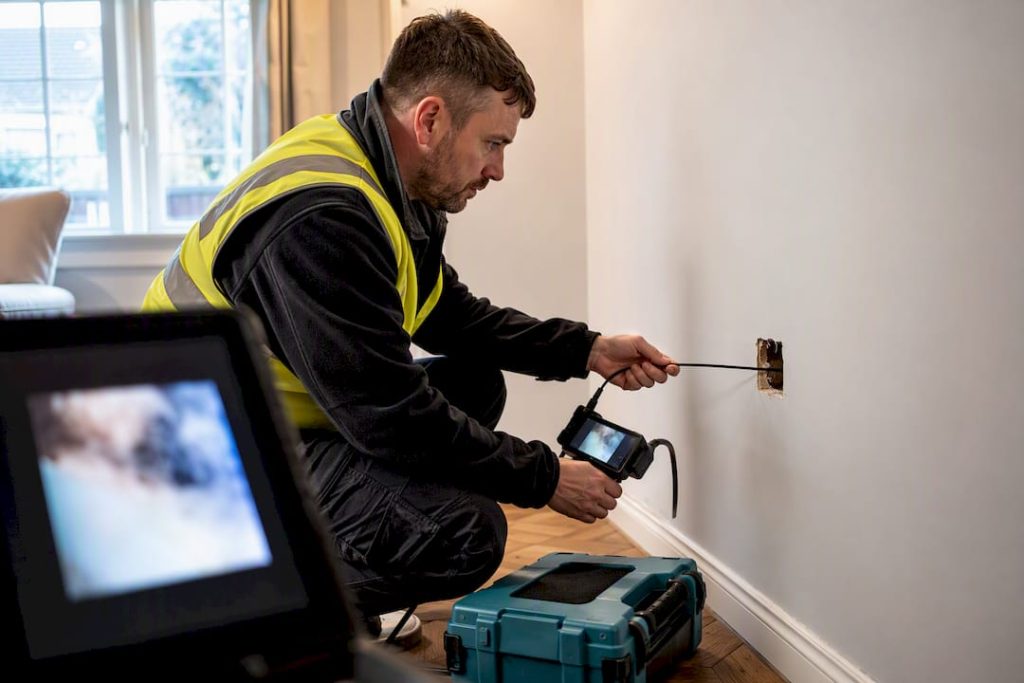
- Borescope inspection technique and what debris, wet fill or wall-tie corrosion actually look like on camera
- How to distinguish a genuinely failed fill from a cosmetic or superficial issue
- When further investigation is warranted before any extraction is recommended
- How to build a photographic evidence package that meets as-built SAP and building control expectations
Pro Tip: Ask any course provider to show a worked example of a photographic evidence package, not just describe one. If they can’t produce a sample, the module probably hasn’t taught it properly.
On calculation tools, decent CPD is honest about limits. Specialist thermal analysis training shows that simple online U-value calculators can be 20 to 30% wrong when applied to framed walls, and that manual checks and professional thermal software each have a proper place. A course that doesn’t flag this gap is teaching you a false sense of precision.
How does RICS CPD counting actually work?
RICS members must record a minimum of 20 hours of CPD per year, with at least 10 of those hours structured. Mandatory topics, covering professional standards, technology and data, and sustainability, rotate across a three-year cycle, so insulation-focused CPD often satisfies the sustainability strand.
- Check the structured threshold. Structured CPD generally needs a minimum activity duration of around 30 minutes; several short activities on the same theme can sometimes be combined to meet this.
- Record through the official channel. Use RICS My Account or the RICS mobile app to log each activity, including the learning outcome, not just the time spent.
- Submit your annual reflection statement by 31 January following the end of your CPD year, alongside your hours record.
- Keep your certificates. Retain the provider’s completion certificate as your audit trail should RICS request evidence.
- Log evidence-gathering practice separately. If a course covers photographic or borescope technique, record what you can now demonstrably do differently on site, not just that you attended.
RICS has also signalled a shift toward digital, sustainability and evidence-led CPD content over the coming cycles, which reinforces why box-ticking attendance no longer cuts it as a professional development strategy.
How do you vet an insulation CPD course before booking?
A short checklist saves you from wasting a Tuesday afternoon on a glorified product brochure.
- Is the course accredited by RICS, RIBA, or a named specialist body, with structured hours clearly stated?
- Are learning outcomes listed before you enrol, not just a topic title?
- Does the course include evidence-led practical examples: borescope footage, thermal imaging case studies, real photographic evidence packages?
- Are tutor credentials and case studies published, or is it an anonymous voiceover?
- What format is it, and does a certificate get issued automatically or only on request?
Useful questions to put to any provider directly: does the module include borescope or thermal-imaging case studies? Is photographic traceability demonstrated for as-built SAP? What assessment or practice exercises come with it?
Pro Tip: Treat any course claiming to diagnose damp or cavity fill failure purely from a thermal image as a red flag. Thermal imaging shows surface temperature patterns, not the inside of a cavity, and any course implying otherwise is teaching a shortcut that will get you in trouble on a real survey.
Other red flags: no stated structured hours, no certificate, or content that’s mostly marketing dressed as training. Choose a face-to-face workshop when you need hands-on diagnostic repetition, and reserve online self-paced modules for topics you already understand conceptually and just need to formalise.
Expert perspective: why evidence-led CPD matters more than hours logged
OSCAR Onsite’s position across its inspection and training work is straightforward: independent assessment first, evidence-led recommendation second, competent remediation only where genuinely warranted, then independent post-remediation certification. CPD that doesn’t reinforce this sequence, in the client’s view, isn’t doing its job.
Photographic traceability, borescope checks and correctly interpreted thermal imaging aren’t optional extras bolted onto a survey report. They’re what separates an evidence-based recommendation from a guess dressed up in technical language. A surveyor who leans on a calculated U-value alone, without checking installation quality or moisture risk on site, is working from theory rather than from what the cavity actually shows.
Competent CPD should leave you with a repeatable inspection protocol you can apply consistently, a reporting style that holds up to scrutiny, and NVQ-aligned competencies that outlast a single afternoon webinar.
— Alan
What’s changing in building regulations that surveyors need to know?
Approved Document L continues to set the fabric performance benchmarks against which insulation work gets judged, and its emphasis on as-built performance, rather than just design-stage calculation, keeps tightening. The practical effect for surveyors is a growing expectation that thermal performance claims are backed by traceable, time-stamped site evidence rather than a paper specification alone.
That shift connects directly to the Future Homes Standard work on SAP 10.3 and the Home Energy Model, both of which push assessment methodology toward outcomes that can be verified after the fact. Practitioner guidance increasingly stresses unintended consequences of over-insulating without addressing ventilation, including overheating risk and moisture build-up, rather than treating thermal numbers as the whole story.
For cavity wall work specifically, the regulatory direction reinforces what good CPD already teaches: a fabric assessment isn’t complete until moisture risk, ventilation adequacy and installation quality have all been checked alongside the calculated figures. Surveyors who keep their CPD current on these points are better placed to write recommendations that survive scrutiny from building control, lenders or a subsequent independent inspection.
How does insulation CPD fit with wider sustainability training?
Insulation CPD rarely sits in isolation any more. RICS’s rotating mandatory topics link sustainability, technology and professional standards into a single three-year cycle, and insulation-specific learning naturally feeds the sustainability strand while also touching on data and evidence practice under the technology strand.
Retrofit coordination is the clearest overlap. A surveyor assessing cavity wall performance is, in practice, assessing one part of a whole-building retrofit strategy that also covers heating systems, ventilation and airtightness. Courses that treat insulation as a standalone topic miss this connection, whereas the stronger multi-part webinar series bundle inspection technique with wider retrofit evaluation and project sequencing.
There’s a professional development logic to this too. If you’re already working toward broader retrofit competence, whether that’s PAS 2035 coordination or general energy efficiency assessment, targeted insulation CPD slots in as one component rather than a separate qualification to chase. Building that cumulative record also strengthens your case when bidding for retrofit-funded work, where demonstrable, structured competence increasingly matters to commissioning bodies and helps firms win more retrofit leads in a competitive market.
What challenges do surveyors face when assessing insulation, and how does CPD help?
The most common difficulty isn’t identifying insulation. It’s distinguishing a genuinely failed cavity fill from one that merely looks suspect. Debris, minor settlement and staining can all mimic more serious problems, and surveyors without structured diagnostic training tend to over-call or under-call the issue in roughly equal measure.
A second recurring challenge is over-reliance on a single tool. Thermal imaging is useful for spotting temperature anomalies on a wall surface, but it does not show what’s happening inside the cavity itself, and treating a thermal scan as a diagnosis rather than a prompt for further investigation is a documented source of misjudged reports.
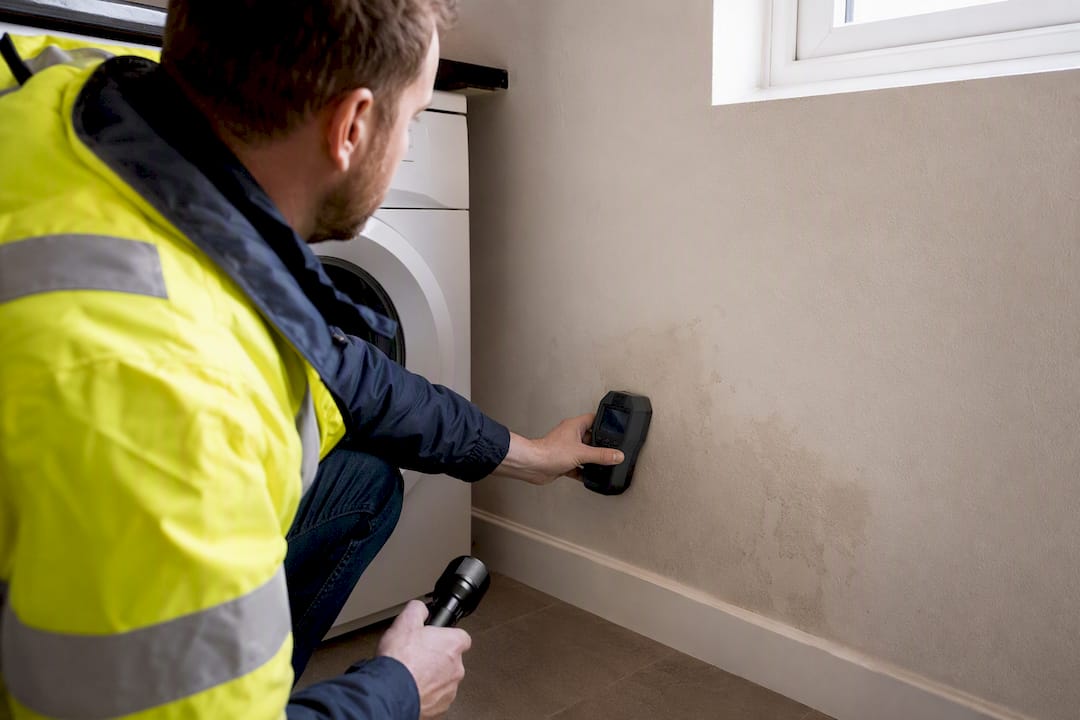
Moisture interpretation causes similar trouble. Symptoms such as damp patches or musty smells have multiple possible causes, and jumping from symptom to diagnosis without borescope confirmation or moisture readings is a recognised weakness in less rigorous surveying practice.
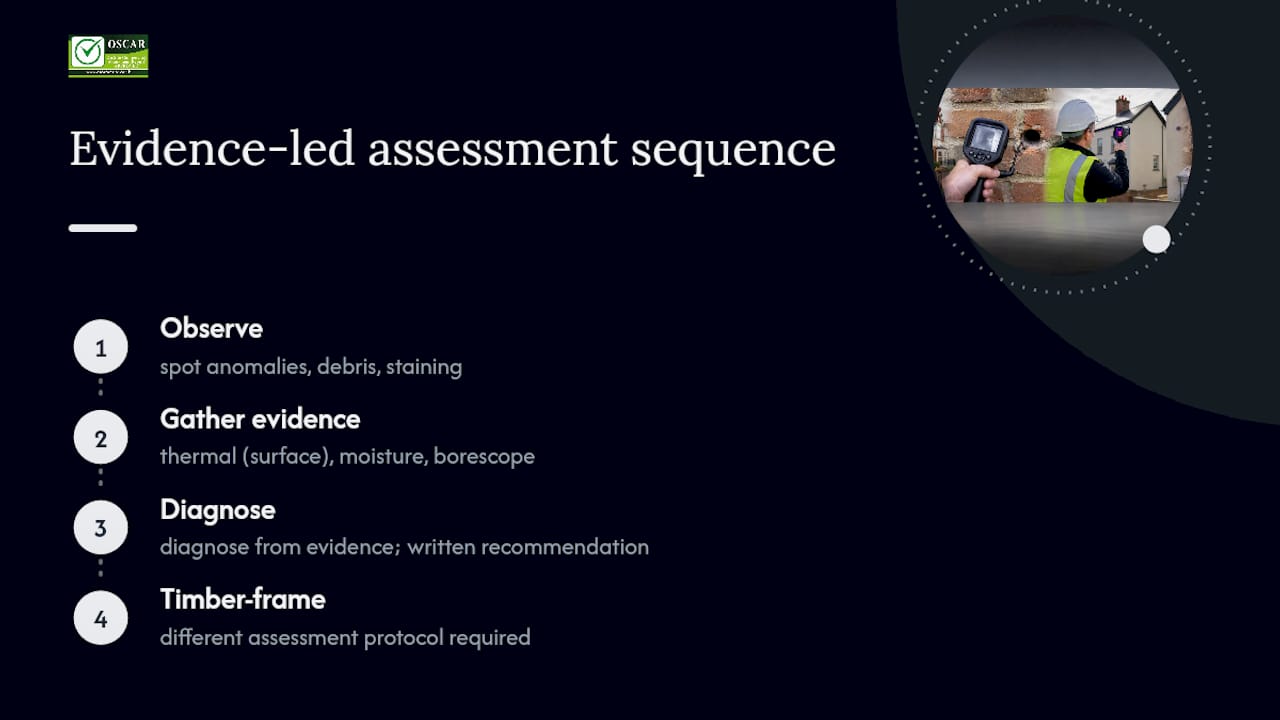
CPD addresses all three by teaching sequence rather than shortcuts: observe, gather evidence, then diagnose, never diagnose from observation alone. Courses that include worked case studies across different wall types, including timber frame constructions, also help surveyors recognise when a standard cavity assessment protocol doesn’t apply and a different approach is needed.
How is learning tested after an insulation CPD course?
Assessment rigour varies enormously between providers, and it’s one of the clearest signals of course quality. The strongest modules include a practical exercise, often a case study requiring the delegate to interpret photographic or borescope evidence and produce a short written recommendation, mirroring what a real survey report demands.
Shorter online modules typically use a multiple-choice quiz to confirm the delegate absorbed the key learning outcomes, which is adequate for topic-level knowledge checks but limited as proof of applied competence. Multi-part webinar series sometimes build in a cumulative assessment across sessions rather than testing each module in isolation.
For anyone working toward NVQ-aligned competencies, formal assessment goes further: it typically includes direct observation of practical skills, a portfolio of evidence from real or simulated site work, and a structured sign-off against defined competency criteria rather than a single exam. That’s a materially different standard from a webinar quiz, and worth understanding before you assume a CPD certificate and an NVQ qualification carry equivalent weight. Whichever format you complete, keep the assessment record alongside your CPD certificate. It’s the evidence RICS may ask for if your recorded learning outcomes are ever queried.
Buying insulation CPD wisely: what the evidence actually supports
The conventional advice on insulation CPD treats hours logged as the goal. That’s backwards. RICS sets a 20-hour floor with 10 structured, but hours alone tell you nothing about whether a surveyor’s diagnostic judgement has actually improved.
What the evidence in this guide supports is a narrower priority: choose CPD that changes what you do on site, not just what you know in theory. A course that teaches you to read a borescope image properly, build a defensible photographic evidence file, or recognise when a thermal anomaly needs further investigation rather than an immediate verdict, is worth more than three generic webinars on U-value theory.
Where most surveyors go wrong is assuming any RICS-listed course is interchangeable with any other. It isn’t. Some are rigorous and evidence-based; others are thin restatements of Approved Document L guidance with a certificate attached. Read the learning outcomes before booking, not after.
— Alan
Book insulation training that matches RICS requirements
Training based on the principles of independent assessment, evidence-based recommendations, competent remediation where warranted, and independent post-remediation certification is recommended. That sequence is exactly what quality insulation CPD should be teaching you, rather than product-led shortcuts.
NVQ Level 2 qualifications in cavity wall insulation surveying and inspection, and in extraction and clearance, alongside CPD-aligned modules covering borescope technique, photographic evidence protocols and site-audit expectations under PAS 2030, are available from recognised providers. These formats map directly to the structured hours and evidence-led learning outcomes RICS members need to record, whether you’re working toward mandatory topic requirements or building broader retrofit competence. The diploma in insulation and building treatments sits alongside independent survey services, giving surveyors a route to see evidence-led inspection reporting in practice, not just in a slide deck.
Delegates receive a completion certificate and a clear competency record suitable for CPD filing. If you want to see the diagnostic standard behind the training first, check the cavity wall insulation risk check service to review how an independent survey is actually documented, then book the course that fits your CPD year.
Sources
Verify claims directly against the RICS CPD rules, Building’s CPD module on the insulation performance gap, and the OSCAR Onsite CWI inspection service page for current training and survey scope.
FAQ
Is there free CPD available for surveyors?
Some professional bodies and manufacturers offer free short modules, typically 30-minute online sessions, though these often carry lighter evidence-based content than paid specialist courses. Always check that any free module states its structured hours and issues a certificate before relying on it for your RICS record.
Do surveyors check insulation during a standard survey?
Surveyors assess visible evidence of insulation type and condition where accessible, but confirming cavity fill condition, moisture presence or wall-tie corrosion usually requires a dedicated inspection using borescope and, where appropriate, thermal imaging rather than a standard visual survey alone.
Will AI replace surveying work?
RICS’s revised CPD framework treats AI and data literacy as a mandatory rotating topic rather than a threat to the profession, reflecting the view that on-site diagnostic judgement, evidence gathering and professional accountability remain human skills that technology supports rather than replaces.
What does a chartered surveyor earn in the UK?
Salary figures vary widely by specialism, region and experience, and no single reliable UK-wide figure applies universally, so this is best checked against current RICS or recruitment-sector salary surveys rather than a fixed number.
How many CPD hours do RICS members need each year?
RICS members must record a minimum of 20 hours of CPD annually, with at least 10 hours structured, and submit their reflection statement by 31 January following the CPD year.
Recommended
- CWI Awareness for Surveyors
- Certificate in Cavity Wall Surveying, Extraction &/or Inspection Occupations
- NVQ Level 2 in Cavity Wall Surveying &/or Inspection Occupations
- NVQ Level 2 in Cavity Wall Extraction & Clearance
Our articles are a mix of human and automated generation, and sometimes mistakes or errors appear.
If you do spot any errors please do let us know via email to: office@oscar-onsite.co.uk