
Funded cavity wall insulation for landlords remains available through ECO4, ECO4 Flex and local council schemes, even though the Great British Insulation Scheme closed on 31 March 2026. Before anything gets fitted, a proper condition survey has to confirm the cavity is actually suitable, and installers working on grant funded jobs must meet PAS 2030 and PAS 2035 standards. Landlords also need to keep MEES in view: an unsuitable cavity can support a wall insulation exemption, but only with written expert evidence.
TL;DR:
- Funded cavity wall insulation is now available mainly through ECO4, ECO4 Flex, and local council schemes, as the Great British Insulation Scheme closed on March 31, 2026.
- Eligibility largely depends on tenant circumstances, with benefits or low-income status key, and the application process involves a condition survey before approval.
- A proper survey must include borescope inspection, wall tie check, moisture indicators, and adherence to PAS 2030 and PAS 2035 standards, with written evidence required.
- Typical costs for unfunded insulation range from £500 to £1,500, but schemes often cover full costs for eligible properties; extraction of failed fill can cost up to £4,000.
- For existing damp issues after insulation, independent inspection and remediation are essential, with certification needed for MEES exemption and to ensure proper, lasting repair.
Table of Contents
- Which grant schemes can fund cavity wall insulation now?
- Who qualifies and how does the application process work?
- What must a pre-installation survey check?
- What does it cost, and how does MEES fit in?
- What if cavity wall insulation has already failed?
- What should landlords insist on as a minimum standard?
- Short perspective: retrofit only earns its keep when done properly
- How OSCAR Onsite supports landlords through survey and certification
- Sources
- FAQ
Which grant schemes can fund cavity wall insulation now?
The Great British Insulation Scheme (GBIS) formally closed on 31 March 2026, so landlords hunting for a single central funding route are out of luck. That does not mean funded cavity wall insulation has disappeared. It means the money has shifted towards other delivery channels, and landlords who assume GBIS is still open will waste time chasing a dead scheme.
Three routes matter now:
- ECO4 funds cavity insulation where a tenant sits on a qualifying benefit, with energy suppliers meeting statutory obligations by paying for the work.
- ECO4 Flex widens eligibility beyond strict benefit criteria, letting local authorities refer low-income or vulnerable households using their own flexible criteria.
- Local Warm Homes and council grants often top up or replace national schemes, though most impose single-measure limits and local eligibility rules.
Ofgem’s guidance on GBIS and ECO explains how these delivery routes and eligibility groups work, including council referral as a common access point. Given how quickly scheme status changes, check Ofgem and gov.uk directly, or ask your local authority’s energy team, rather than relying on a contractor’s sales pitch about what is “currently available.”
Who qualifies and how does the application process work?
Eligibility for funded cavity wall insulation is largely tenant centred, not landlord centred. Ofgem’s own guidance ties most funding routes to the household living in the property, which means your ability to secure funding depends heavily on your tenant’s circumstances.
- Check the qualifying criteria. A tenant receiving a qualifying benefit, or living in a low-income or cold-prone household under ECO4 Flex, typically opens the door to funded works. Council tax band evidence sometimes supports the flex route.
- Establish who applies. Either the tenant contacts an installer or scheme referrer directly, or the local authority makes a referral on the household’s behalf. Landlords are rarely the applicant, but you will need to give consent for works and access.
- Expect a defined sequence. Eligibility check, then a condition survey, then scheme approval, then installation, then certification. Skipping the survey step to speed things along is where most landlord problems start.
Cooperating quickly with consent requests matters. A stalled landlord signature is one of the most common reasons a funded application drags on for months.
What must a pre-installation survey check?
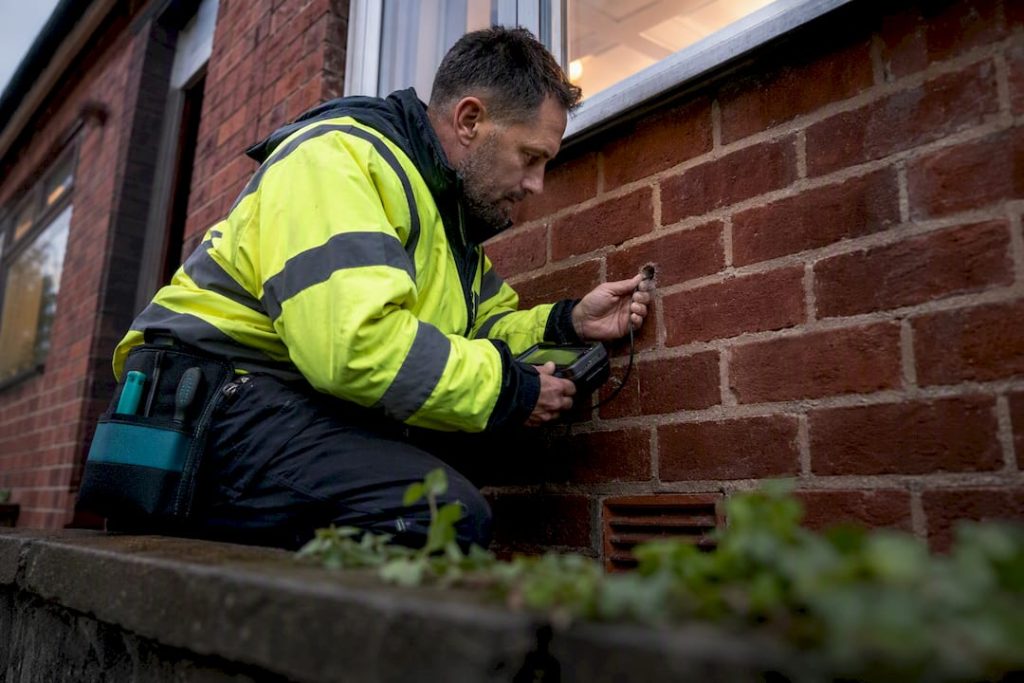
No competent installer should fit cavity wall insulation without a proper condition survey first, and landlords should treat this as non-negotiable regardless of who is paying. A borescope inspection lets a surveyor examine inside the cavity through a small drilled hole, checking:
- Cavity width and whether it matches the intended fill material.
- Existing debris, mortar snots, or partial fill from a previous, possibly failed, installation.
- Wall tie condition, since corroded ties are a structural issue insulation cannot fix.
- Exposure rating, because wind-driven rain zones change what fill is appropriate or whether fill is advisable at all.
- Visible moisture indicators, recorded with dated photographs rather than assumptions.
PAS 2030 sets measure-specific installation requirements, while PAS 2035 governs the wider retrofit process, and any installer working under a government scheme should be able to demonstrate compliance with both. TrustMark registration is the practical proof point landlords should ask to see. Where a survey finds fouled ties or existing damp, the fix is remediation first: cleaning the cavity, replacing ties, or in genuinely exposed locations, ruling out fill altogether in favour of an alternative measure.
Pro Tip: Ask for the written go/no-go survey report, including borescope photographs, before you agree to any installation date. A verbal “it looks fine” from a salesperson is not evidence, and it will not help you if the fill later fails.
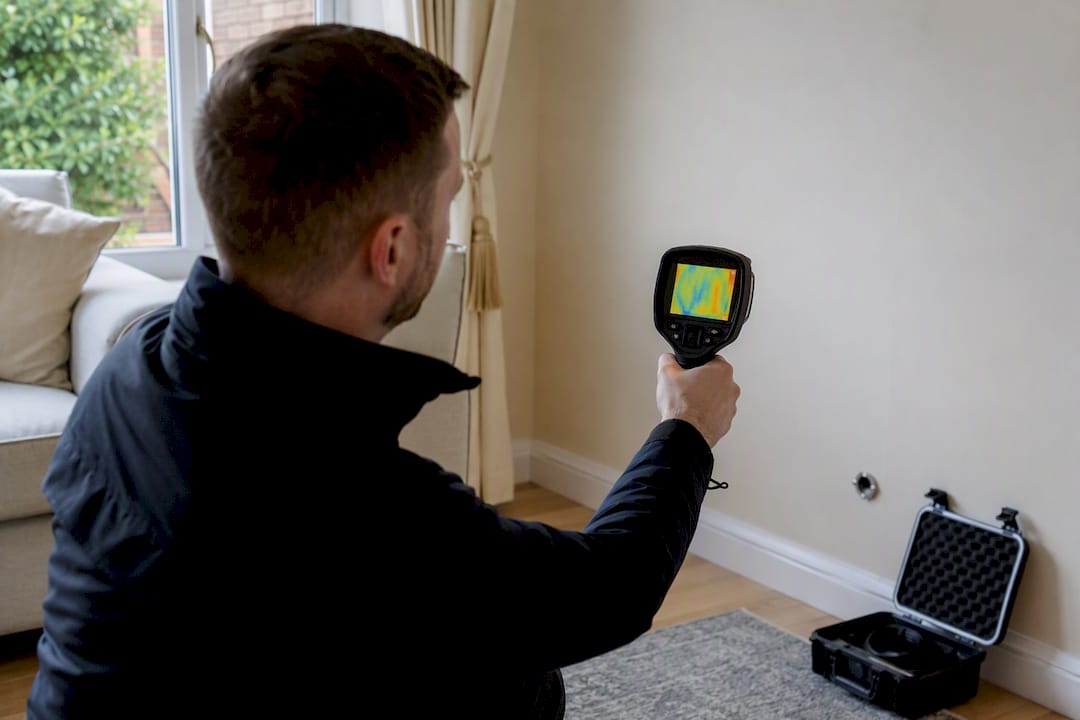
Thermal imaging can support a survey by highlighting temperature anomalies across a wall surface, but it does not see inside the cavity. It is a supplementary check, not a substitute for borescope inspection, and PAS guidance stresses whole-house ventilation thinking alongside any fabric measure to avoid trapping moisture.
What does it cost, and how does MEES fit in?
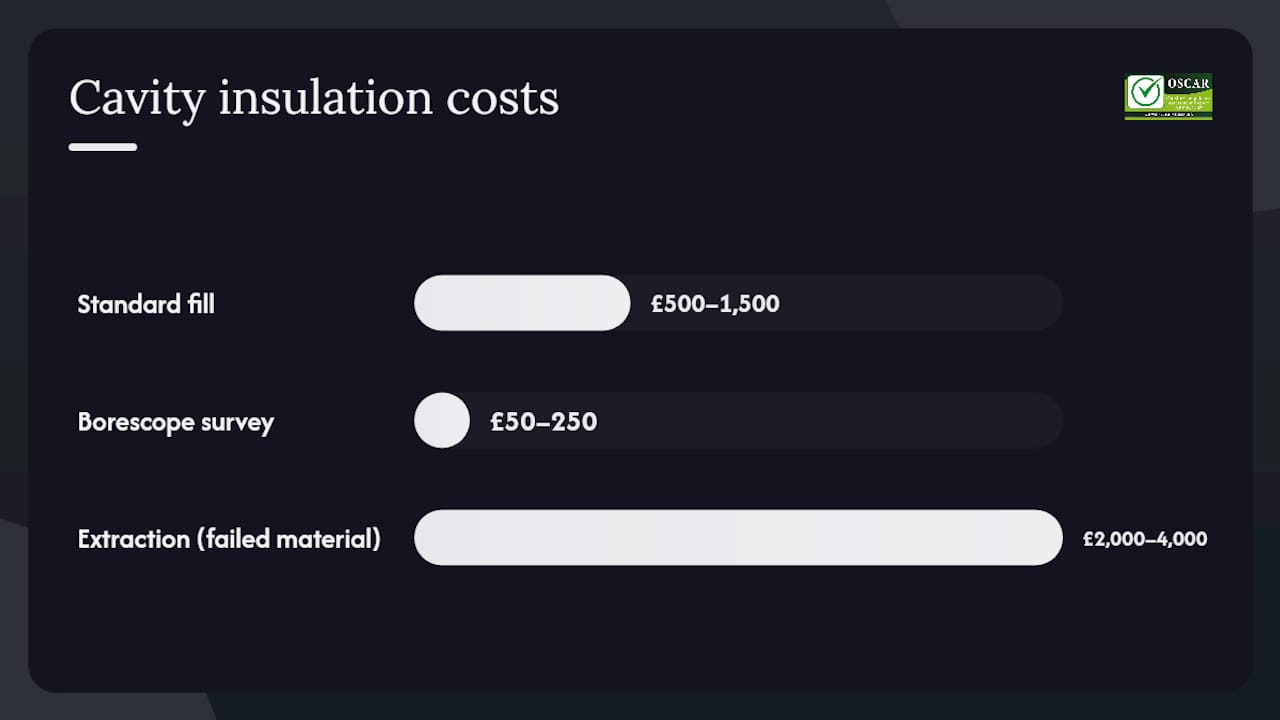
Where funding routes apply, ECO4 and ECO4 Flex typically cover the full cost of cavity insulation for eligible properties, though schemes will not fund a cavity that already has insulation fitted. For unfunded work, expect roughly £500 to £1,500 for a standard fill, £50 to £250 for a borescope survey, and £2,000 to £4,000 if extraction of failed material is needed first. These figures are indicative rather than fixed quotes, and exposure, wall type and access all move the number.
MEES sits behind all of this. Private landlords in England and Wales cannot legally let a property rated F or G without a valid exemption. If a genuinely unsuitable cavity is holding your EPC down, a wall insulation exemption is available, but only with:
- Written expert advice confirming insulation would damage the property’s fabric.
- Supporting photographs and survey evidence.
- A current EPC on file.
- Registration through the official exemptions register, valid for five years before reassessment.
What if cavity wall insulation has already failed?
Damp appearing after a cavity fill does not automatically mean the insulation caused it, and landlords should resist diagnosing from symptoms alone. Rising damp, penetrating damp from a defective render, and insulation-related condensation can look similar on a bedroom wall.
- Order an independent condition survey. Borescope inspection combined with thermal checks, plus photographs and cavity measurements, gives you evidence rather than guesswork.
- Follow the evidence to a remediation route. If the survey confirms saturated or bridging insulation, extraction and clearance comes first, followed by drying time and any structural repairs the ties or masonry need.
- Get independent post-remediation certification. Do not treat the job as finished until someone independent has verified the cavity is clean and dry.
- Escalate if the original installer will not act. Government consumer guidance recommends contacting the installer first, then a guarantee provider such as CIGA, and escalating to Trading Standards or Citizens Advice if that fails.
Remember your statutory position throughout. Section 11 repairing obligations and the Homes (Fitness for Human Habitation) Act mean damp caused by defective insulation is your responsibility to fix, not something you can leave for the tenant to manage. Guidance on landlord duties around damp sets out how those obligations apply in practice, and if you are pursuing a warranty claim, it helps to know what to check first on a failed cavity insulation claim.
What should landlords insist on as a minimum standard?
Evidence-led practice means the survey comes before the recommendation, and the recommendation comes before any work is booked. For landlords, that translates into a simple checklist:
- A borescope survey with dated photographs, not a verbal opinion.
- A written go/no-go report naming the suggested fill system, or explaining why fill is not advisable.
- Confirmation of PAS 2030:2023 and PAS 2035:2023 compliance from the installer.
- NVQ trained operatives carrying out the physical work, particularly for extraction and clearance.
- An independent post-remediation clearance certificate once any remedial work is finished.
OSCAR Onsite trains and accredits independent firms against exactly this standard, and its condition inspection survey service is built around producing the kind of written, photographic evidence landlords need for both funding applications and MEES exemption files.
Short perspective: retrofit only earns its keep when done properly
Grants make cavity wall insulation cheap or free for many landlords, but a subsidised install on an unsuitable cavity still creates a damp problem you will own. Insist on the survey. Insist on PAS-compliant installers. Treat the paperwork as a legal safeguard, not admin.
— Alan
How OSCAR Onsite supports landlords through survey and certification
Grant schemes will pay for the fill, but nobody funds the aftermath of a bad decision. That is where an independent survey earns its cost back many times over, whether you are chasing eligibility evidence, checking a suspect cavity, or dealing with a wall that has already gone wrong.

OSCAR Onsite carries out independent condition inspection surveys using borescope and thermal imaging methods, producing the written go/no-go evidence landlords need before committing to funded or unfunded work. Where a cavity has already failed, OSCAR Onsite’s extraction and clearance service removes saturated or bridging material and restores the wall to a breathable condition, with independent certification once the work is done. That certification also matters for MEES exemption files, since it gives you the documented expert evidence the register requires. Landlords managing several properties can start with a risk check survey to triage which addresses need urgent attention. If your portfolio spans several regions, checking a partner’s approach to maintaining building facades is a sensible companion step, since exterior condition affects cavity suitability too. Book a survey or request a quote through OSCAR Onsite’s service pages to get an independent, evidence-based starting point.
Sources
- Great British Insulation Scheme: summary (May 2026)
- Great British Insulation Scheme – Ofgem
- Cavity wall insulation: surveys, risks and grants | EPCGuide
FAQ
Who qualifies for free cavity wall insulation?
Households on qualifying benefits typically access free cavity insulation through ECO4, while ECO4 Flex extends this to low-income or vulnerable households referred by their local authority, so eligibility depends mainly on the tenant’s circumstances rather than the landlord’s.
What are the new rules on cavity wall insulation?
Grant-funded installations must now comply with PAS 2030:2023 and PAS 2035:2023 process standards, and GBIS itself closed on 31 March 2026, pushing landlords towards ECO4, ECO4 Flex and local grant routes instead.
Why are people removing cavity wall insulation?
Extraction usually follows a survey confirming saturated fill, debris, or bridging material causing damp, which independent inspection with borescope and thermal checks should confirm before any removal work is agreed.
How much does it cost to insulate a cavity wall in the UK?
An unfunded fill typically costs £500 to £1,500, a borescope survey runs £50 to £250, and extraction of failed insulation can cost £2,000 to £4,000, though eligible landlords often pay nothing through ECO4 or local grant routes.
Recommended
- Avoid Legal Risk: UK Landlords’ Damp Duties and Cavity Wall Guidance
- Inspect, Diagnose, Decide: Cavity Wall Insulation Lifespan UK Homes
- Check UK Cavity Wall Installer Accreditation and When to Order a Survey
- Pay £100–£250, Not £4,000: Cavity Wall Survey Cost for UK Homeowners
Our articles are a mix of human and automated generation, and sometimes mistakes or errors appear.
If you do spot any errors please do let us know via email to: office@oscar-onsite.co.uk