Poorly installed or failed cavity wall insulation (CWI) can directly contribute to damp and mould conditions that pose genuine health risks to occupants. The short answer is yes: CWI can cause health problems, but only when it fails or was installed inappropriately. The insulation material itself is not inherently toxic in normal use. The danger comes from what happens when it goes wrong — moisture ingress, saturated fill, and the mould growth that follows.
Approved Document C of the Building Regulations requires walls to protect occupants from precipitation, condensation and ground moisture. When CWI installations breach those requirements, the consequences can be serious. The HomeOwners Alliance has documented how failed installations lead to moisture infiltration, damp walls and mould growth — a known hazard for people with respiratory conditions, allergies or weakened immune systems.
If you suspect a problem, take these steps now:
- Stop any DIY attempts to open walls or remove insulation — disturbing mould or insulation material without containment worsens exposure.
- Arrange an independent CWI condition inspection from an accredited surveyor before accepting any extraction quote.
- Contact your original installer and, if installed under an ECO scheme, your guarantee provider via Ofgem.
- Escalate to Trading Standards or Citizens Advice if the installer is unresponsive.
The credible response to a suspected CWI failure involves Ofgem/ECO guarantees, compliance with PAS 2030 and PAS 2035, RICS-qualified surveyors, and an independent inspection from a body such as OSCAR Onsite — not a door-to-door extraction sales pitch.
Table of Contents
- How does CWI failure lead to damp, condensation and mould?
- What are the health risks from damp and mould in UK homes?
- What signs suggest your cavity wall insulation is failing?
- What does a proper CWI condition survey involve?
- What are your remediation options if CWI has failed?
- Key takeaways
- Why independent, evidence-led inspection is the only responsible starting point
- How OSCAR Onsite can help you resolve a CWI problem safely
- Useful UK sources and official contacts
How does CWI failure lead to damp, condensation and mould?
Cavity wall insulation works by filling the air gap between the inner and outer leaf of a brick or block wall, reducing heat loss. When it works correctly, it does exactly that. When it fails, the cavity becomes a conduit for moisture rather than a barrier against it.
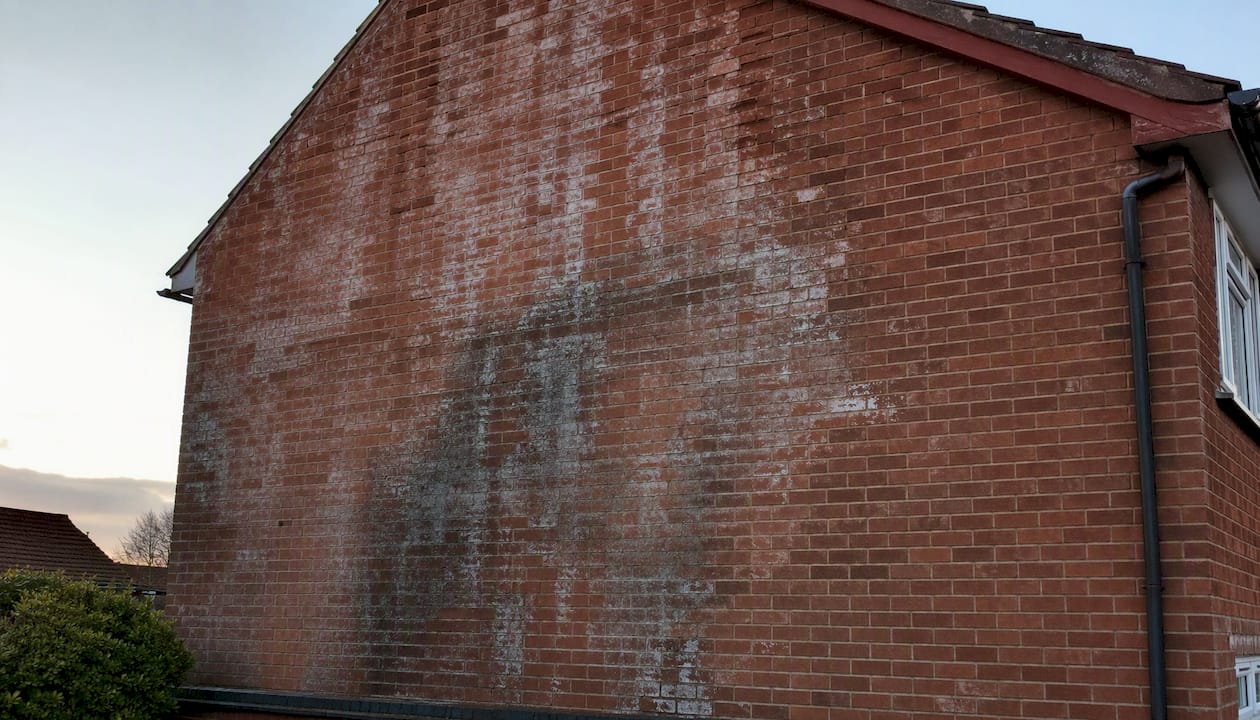
The most common failure mechanism is rain-driven ingress. Wind-driven rain penetrates the outer leaf through cracks, eroded mortar joints or poorly sealed drill holes, and the insulation absorbs that moisture rather than allowing it to drain away as an empty cavity would. Wet insulation loses its thermal resistance, so the inner wall surface becomes colder — and a colder surface is where condensation forms. Salt-laden spray in coastal areas accelerates masonry erosion, making this problem worse.
Mortar droppings left in the cavity during original construction create bridges between the outer and inner leaf. When insulation is blown in around these bridges, moisture can wick directly across to the internal plaster. Ground moisture is a separate but related issue: where sub-soil drainage is poor or a damp-proof course is absent or compromised, rising moisture can saturate the lower courses of insulation and spread upward.
Installation errors compound all of this. Overfilling a narrow cavity, using a high-density material in a wall with existing mortar bridges, or failing to seal drill holes properly after installation all increase the probability of failure. Industry reporting links increased UK rainfall over the past decade to a higher likelihood of insulation failure, with moisture ingress damaging thermal performance and accelerating mould growth.
Pro Tip: Before assuming the insulation is at fault, check external weatherproofing and pointing first. Eroded mortar joints and cracked render are often the primary entry point for moisture — and fixing them may resolve the problem without touching the insulation at all.
The key mechanism to understand: wet insulation does not just fail to insulate — it actively prolongs drying times, keeping the wall wetter for longer and creating the sustained moisture conditions that mould needs to establish itself.
What are the health risks from damp and mould in UK homes?
Damp and mould are not just cosmetic problems. Government guidance on damp and mould health risks is unambiguous: mould produces spores and toxins that are harmful to health, and dampness alone raises risk even when no visible mould is present. The health effects of black mould and other mould species include respiratory irritation, allergic reactions, worsening of asthma and chronic obstructive pulmonary disease (COPD), and in severe cases, hypersensitivity pneumonitis.
The health concerns of cavity wall insulation failures are not evenly distributed. Some people are significantly more vulnerable than others.
Groups at heightened risk include:
- Children, whose developing respiratory systems are more susceptible to airborne spores.
- Older people, particularly those with reduced mobility who spend more time indoors.
- People with asthma, COPD, hay fever or other respiratory conditions.
- Those with weakened immune systems, including people undergoing chemotherapy or living with HIV.
- Occupants in poorly heated or poorly ventilated homes, where moisture cannot escape.
One aspect that catches many homeowners off guard: concealed mould behind plasterboard, inside wall cavities or beneath wallpaper can affect air quality without any visible growth on surfaces. If you notice a persistent musty smell, increased condensation on windows, or worsening respiratory symptoms that improve when you leave the property, mould may be present even if you cannot see it. Guidance on mould behind wallpaper explains what to do before disturbing any surfaces.
While waiting for an inspection, take these practical steps to reduce exposure:
- Open windows briefly each day to ventilate, even in cold weather.
- Do not scrub or disturb visible mould — this releases spores into the air.
- Keep vulnerable occupants away from the most affected rooms where possible.
- Seek medical advice promptly for anyone with worsening respiratory symptoms.
What signs suggest your cavity wall insulation is failing?
The difficulty with CWI failures is that the symptoms overlap with several other causes of damp. A professional diagnosis is always needed, but these indicators suggest CWI may be implicated rather than, say, a plumbing leak or solid-wall condensation.
External signs worth checking:
- Damp patches on the outer wall face after heavy rain, particularly at mid-height rather than at the base (which would suggest rising damp).
- Eroded or missing mortar joints, cracked render, or visible gaps around window and door frames.
- Salt staining (white crystalline deposits) on brickwork, which indicates moisture movement through the masonry.
- Blocked or damaged gutters and downpipes allowing water to run down the wall face.
- Drill holes from the original CWI installation that appear poorly sealed or open.
Internal signs to look for:
- Cold, damp patches on internal plasterwork, particularly on external walls.
- Peeling paint or wallpaper, especially on external walls at mid-height.
- Visible mould growth on walls or in corners — often appearing as black or dark green patches.
- A persistent musty or earthy smell in rooms on external walls.
- Increased condensation on windows in rooms adjacent to external walls.
For a closer look at thermal bridging and cold spots on walls, thermal imaging during a professional inspection will reveal temperature differentials invisible to the naked eye.
Do not open walls yourself. Photographs of external and internal symptoms, dated and cross-referenced with weather events, are valuable evidence for an inspector. Drilling or cutting into walls without containment can spread mould spores, destroy evidence and create a safety risk. Preserve the condition of the property and let a qualified surveyor carry out any intrusive investigation.
What does a proper CWI condition survey involve?
A thorough inspection is not a visual check and a quote for extraction. A competent independent surveyor follows a structured methodology that distinguishes genuine insulation failure from other damp causes — and that distinction determines the correct remedial pathway.
| Survey stage | What it involves | Tools used |
|---|---|---|
| Desktop review | Check installation records, scheme documentation, previous survey reports | Installation certificates, ECO records |
| External inspection | Assess masonry condition, pointing, render, gutters, drainage, drill holes | Visual inspection, moisture meter |
| Internal inspection | Map damp and cold patches, check plasterwork, identify mould locations | Calibrated moisture meter, thermal imaging camera |
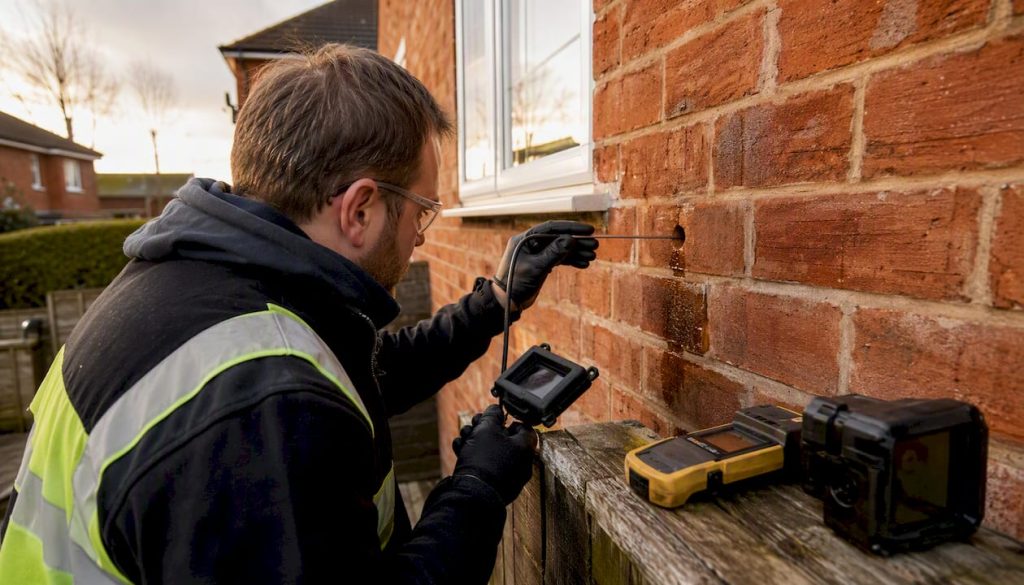
| Borescope investigation | Insert camera into cavity through existing or new drill holes to view insulation condition directly | Borescope / endoscope with image logging |
| Thermal imaging | Identify cold bridging, moisture patterns and areas of missing or saturated fill | Thermal imaging camera |
| Moisture readings | Surface and sub-surface readings at multiple points across affected elevations | Calibrated moisture meter |
| Report and pathway | Executive verdict, photographic evidence, moisture map, thermal images, recommended remedial route | Written condition report |
The OSCAR Onsite CWI condition inspection survey uses borescope, thermal imaging and calibrated moisture readings to produce an evidence-led report that clearly distinguishes insulation failure from other damp causes. For professionals wanting to understand the equipment involved, guidance on thermal imaging cameras for cavity wall surveys explains what to look for in survey-grade kit.
When asking an inspector to quote, check: Are they independently accredited? Will they provide a written report with photographic evidence? Do they recommend independent accredited extraction and clearance certification rather than selling extraction themselves? An inspector who quotes for extraction in the same visit as the survey has a conflict of interest.
What are your remediation options if CWI has failed?
The right remedial route depends on what the survey finds. Not every CWI failure requires full extraction, and not every damp problem is caused by the insulation. An independent condition report should drive the decision.
| Remedial option | When appropriate | Typical timeline | Key limitation |
|---|---|---|---|
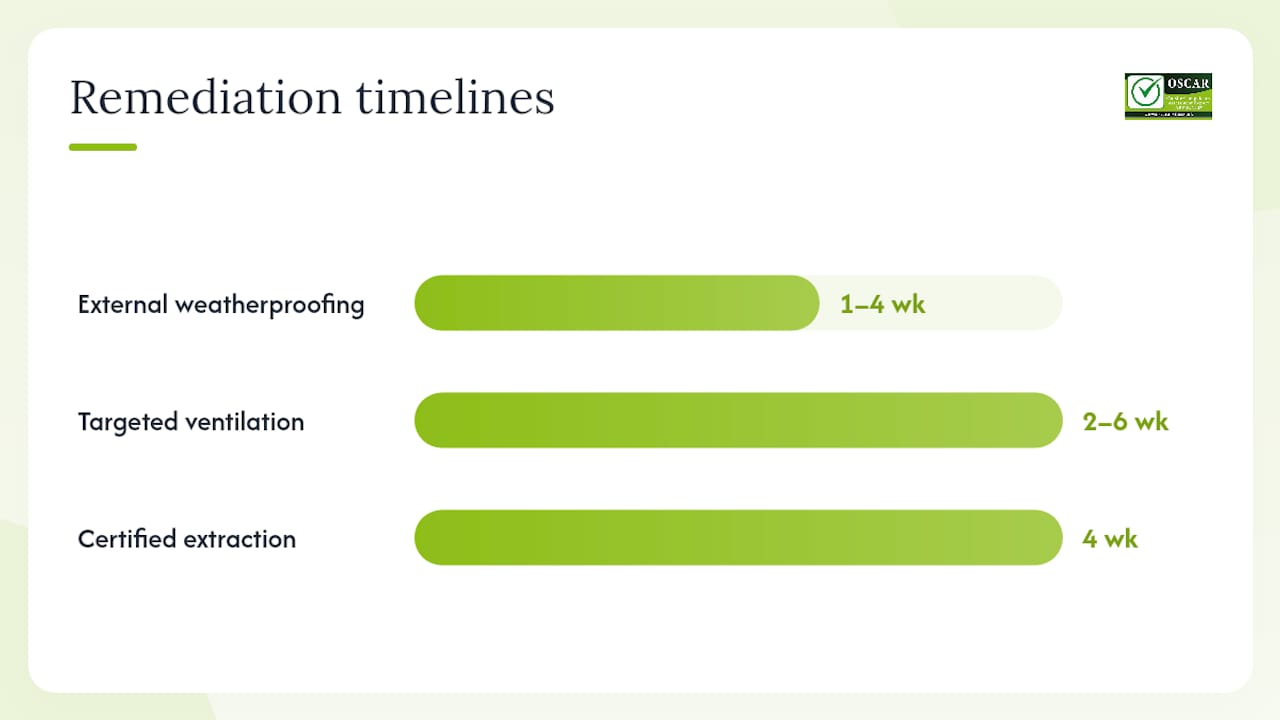
| External weatherproofing only (repointing, render repair, gutter work) | Moisture source is external defects, not insulation failure | 1–4 weeks | Does not address already-saturated fill |
| Targeted ventilation and localised repair | Isolated damp area, insulation otherwise sound, no health risk to occupants | 2–6 weeks | Requires monitoring to confirm resolution |
| Certified extraction and clearance | Widespread saturated fill, persistent interstitial condensation, health risk to occupants | 4 weeks depending on property size | Highest cost; cavity must be dried and certified before reinstatement |
Waterproofing treatments applied to the external envelope can reduce rain penetration in exposed properties and may allow insulation to be retained or reinstated after drying — but only where a condition survey confirms the insulation itself is not already compromised.
Where full extraction is justified, the process involves safe access to the cavity, contained removal of insulation material to prevent cross-contamination, follow-up drying of the cavity, and independent technical monitoring throughout. The process concludes with a clearance certificate that confirms dryness criteria have been met, provides photographic evidence of the cleared cavity, and documents the independent technical monitoring. Without that certificate, there is no objective proof the cavity is fit for reinstatement or that the health risk has been resolved.
For a detailed breakdown of cavity wall insulation removal costs in the UK, OSCAR Onsite provides guidance on what extraction typically involves and how costs are shaped by property size and access.
Key takeaways
Failed cavity wall insulation can cause damp and mould conditions that pose real health risks, particularly for children, older people and those with respiratory conditions — and an independent CWI condition inspection is the essential first step before any remedial decision.
| Point | Details |
|---|---|
| CWI can cause health risks indirectly | Failed or inappropriate CWI leads to damp and mould, which carry well-documented respiratory and allergic health risks. |
| Vulnerable groups face greater risk | Children, older people, and those with asthma, COPD or weakened immune systems are most affected by mould exposure. |
| Immediate mitigation matters | Ventilate daily, avoid disturbing mould, and keep vulnerable occupants away from affected rooms while awaiting inspection. |
| Use the consumer escalation route | Contact the installer, then the guarantee provider via Ofgem, then Trading Standards or Citizens Advice if needed. |
| OSCAR Onsite inspection first | Book an independent CWI condition inspection survey before agreeing to any extraction work. |
Why independent, evidence-led inspection is the only responsible starting point
The CWI sector has a structural problem that most homeowners do not see until they are already caught in it: the same companies that profit from extraction are often the ones diagnosing the need for it. That conflict of interest has driven a pattern of unnecessary removals, unresolved damp problems and homeowners left worse off than before.
OSCAR Onsite was founded specifically to break that cycle. The inspection-first approach is not a commercial preference — it is the only way to know whether extraction is genuinely necessary, whether the damp has another cause entirely, and whether the property is in a condition where reinstatement would be safe. That is why OSCAR Onsite authored the UK’s first NVQ Level 2 qualifications in CWI Surveying and Inspection and in CWI Extraction and Clearance: to establish a national standard for what competent, independent practice actually looks like, and to give the industry a benchmark it could be held to.
What concerns me most, having worked across hundreds of cases, is how often the underlying cause of damp is external masonry defects rather than insulation failure. An independent survey catches that. A sales-led extraction quote does not. Homeowners who skip the independent inspection and go straight to removal frequently find the damp persists — because the insulation was never the primary problem.
The OSCAR Onsite CWI Condition Inspection Survey covers desktop review, external and internal inspection, borescope investigation, thermal imaging and calibrated moisture readings, culminating in a written report with a clear remedial pathway. Where extraction is the right answer, we refer to OSCAR Onsite Accredited Member Firms and provide independent technical monitoring and clearance certification — so the outcome is verified, not just claimed.
Book an independent inspection before any removal work. If extraction is recommended, insist on an accredited contractor and independent clearance certification. That sequence protects your health, your property and your consumer rights.
How OSCAR Onsite can help you resolve a CWI problem safely
If damp, mould or cold walls are making you question whether your cavity wall insulation is doing more harm than good, the starting point is an independent diagnosis — not a removal quote.

OSCAR Onsite provides independent CWI condition inspection surveys that use borescope investigation, thermal imaging and calibrated moisture readings to produce a clear, evidence-led report. That report tells you whether the insulation has failed, whether another cause is responsible, and what the appropriate remedial pathway looks like. OSCAR Onsite authored the UK’s first NVQ Level 2 qualifications in CWI Surveying and Extraction, has trained and accredited more than 250 firms nationwide, and operates under PAS 2030:2023, PAS 2035 and TrustMark requirements.
Where extraction is justified, OSCAR Onsite refers to its network of Accredited Member Firms and provides independent technical monitoring and clearance certification throughout the process. Where it is not justified, the report says so clearly — protecting you from unnecessary cost and disruption.
Book your independent CWI condition inspection at oscaronsite.co.uk/services/cwi-condition-inspection-survey.
Useful UK sources and official contacts
| Source | What it covers | When to use it |
|---|---|---|
| GOV.UK damp and mould guidance | Health risks of damp and mould, vulnerable groups, ventilation requirements | Understanding health impacts and landlord obligations |
| GOV.UK CWI consumer guide (PDF) | Consumer steps for suspected faulty installations, guarantee routes, claims management warnings | Contacting installers, guarantee providers and escalating complaints |
| Approved Document C (Building Regulations) | Regulatory requirements for resistance to moisture and condensation | Understanding installer obligations and regulatory standards |
| Energy Saving Trust | Suitability guidance for CWI, standard checks before installation | Assessing whether CWI is appropriate for your property |
| HomeOwners Alliance | Documented CWI failures, consumer experience and prevalence | Background on the scale and nature of reported failures |
| GOV.UK waterproofing cavity walls | Research on waterproofing treatments for exposed properties | Considering alternatives to extraction in exposed locations |
| Citizens Advice | Free consumer rights guidance, complaint escalation | When the installer or guarantee provider is unresponsive |
| Trading Standards | Reporting mis-selling, negligent installation or suspicious claims management approaches | Formal complaints and consumer protection enforcement |
| OSCAR Onsite condition inspection | Independent CWI surveys, accredited extraction referral, clearance certification | Booking an independent inspection before any remedial decision |