
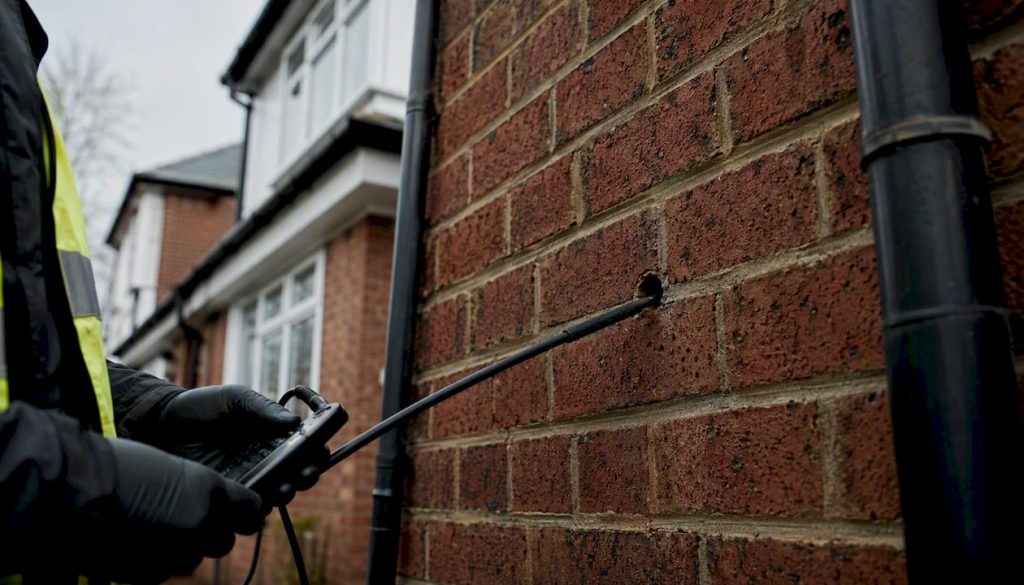
If your home had wall insulation fitted under ECO4 or the Great British Insulation Scheme between April 2022 and January 2025, you are likely covered for a free audit and repair. The original installer is liable for fixing faulty work, and you should not have to pay a penny for remediation. Call the Ofgem ECO helpline on 0808 169 4447 or contact TrustMark directly to request a home inspection.
Do this in the next 72 hours:
- Check for any letter already sent to you by Ofgem about your installation
- Photograph any damp patches, mould, or visible insulation defects around the property
- Locate your original installation paperwork, including installer name and completion date
- Avoid signing anything with a claims management company that cold-calls you
Pro Tip: Keep every piece of correspondence in one folder, digital or physical, from day one. Homeowners who arrive at an audit with dates, photos, and paperwork ready tend to move through the process far faster than those reconstructing the story from memory months later.
An audit of 758 homes found that an estimated 98% of external wall insulation and 29% of internal wall insulation fitted under these schemes before mid January 2025 has major issues needing remediation. You are far from alone in this.
Key Takeaways
Households insulated under ECO4 or GBIS between April 2022 and January 2025 are typically entitled to a free audit and repair, with the original installer liable for costs.
| Point | Details |
|---|---|
| Confirm your scheme window | Check paperwork for installation dates between April 2022 and January 2025 and any TrustMark references. |
| Call the right helpline first | Ring the Ofgem ECO helpline on 0808 169 4447 before engaging any private company. |
| Build your evidence pack | Photograph damp, mould, and defects, and keep all installer and Ofgem correspondence together. |
| Follow the escalation ladder | Move from installer to Scheme Provider or TrustMark, then to the DRO within 12 months if unresolved. |
| Get an independent survey before removal | Book an OSCAR Onsite Condition Inspection Survey to confirm whether extraction is genuinely needed. |
Official contacts and useful links
- Gov: official steps and the Ofgem helpline number
- Ofgem’s ECO4 complaints process: how to raise a formal complaint
- Citizens Advice on faulty solid wall insulation: plain English consumer support
- OSCAR Onsite’s condition inspection survey: independent diagnosis before any extraction decision
Table of Contents
- What went wrong with ECO4 and GBIS insulation?
- How do I check if my installation was under ECO4 or GBIS?
- What should I do first if I suspect failed insulation?
- Who pays for remediation and how long does it take?
- What if the installer refuses, delays, or has gone bust?
- When does insulation need removing rather than repairing?
- How OSCAR Onsite supports households through this process
- Sources
What went wrong with ECO4 and GBIS insulation?
The scale of the failure is bigger than most homeowners realise. TrustMark audits flagged widespread substandard solid wall insulation work, prompting government action that suspended some installers and put Ofgem in charge of overseeing a national find-and-fix programme.
The main risks showing up in affected homes include:
- Damp penetrating through poorly fitted external render or internal dry lining
- Mould growth linked to trapped moisture and blocked ventilation paths
- Water ingress around window reveals, cavity closers, and roofline junctions
- A smaller share of properties with more urgent structural or safety concerns
The timeline runs roughly like this: ECO4 and GBIS launched in 2022, TrustMark issued alerts about poor workmanship in October and November 2024, national audits followed through mid-2025, and Ofgem has since been managing the government’s remediation response.
How do I check if my installation was under ECO4 or GBIS?
Start with your paperwork. Look for the scheme name printed on your certificate, the installer’s registration details, the date the works were completed, and any reference to TrustMark or a specific certification body.
Two dates matter most here. If your insulation was fitted between April 2022 and January 2025, you fall inside the window flagged by the parliamentary audit. If you have already received a letter from Ofgem or your energy supplier referencing your installation, that is a direct signal you are on the list for review.
If you cannot find any of this:
- Call the Ofgem ECO helpline and ask them to check your address against scheme records
- Contact TrustMark and request a records search using your postcode and installation year
- Ask Citizens Advice to talk you through which scheme applied to your case
A quick technical risk check can also flag warning signs before an official audit even reaches your door.
What should I do first if I suspect failed insulation?
Getting the order right protects both your health and your case. Work through these steps before anyone from an official body arrives:
- Check for immediate hazards. Look for visible mould colonies, persistent musty odours, or fresh water staining. Report anything serious to TrustMark or Ofgem straight away rather than waiting for a scheduled visit.
- Build your evidence pack. Photograph every affected wall, room, and external elevation. Note dates. Keep your original installation certificate and any letters from Ofgem, your supplier, or the installer.
- Refuse claims management approaches. Genuine remediation is free and arranged through official channels. Anyone asking for an upfront fee or a signature before an inspection is not part of the legitimate process, a pattern the government’s own consumer guidance specifically warns against.
- Verify inspector credentials. Ask for ID before letting anyone into your home, and confirm they are attending on behalf of TrustMark, the Scheme Provider, or a recognised guarantee body.
- Prepare for the visit. Clear access to affected rooms, loft hatches, and external walls, and make arrangements for pets so the inspection runs smoothly.
If you spot mould developing behind wallpaper or plasterboard, our guide on what to do first walks through safe handling before any repair work begins.
Who pays for remediation and how long does it take?
The process follows a defined sequence, even if it does not always feel that way from the homeowner’s side.
- Audit is triggered by an Ofgem letter, a TrustMark records match, or your own complaint to the helpline.
- A site inspection happens, checking external cladding or internal dry lining, ventilation pathways, and whether original paperwork matches what was actually installed.
- TrustMark or the relevant certification body reviews the audit findings and confirms whether remedial work is required.
- Remedial works are scheduled, either with the original installer or, where that firm has ceased trading, through a guarantee provider or insurer standing behind the original work.
- A guarantee is reissued once work passes inspection, giving you documented protection going forward.
On liability, the position is clear: the original installer carries responsibility for putting faults right at no cost to you. Where an installer has gone out of business, guarantee schemes such as the Cavity Insulation Guarantee Agency (CIGA) or the Installation Assurance Authority (IAA) step in, and the government has repeatedly stated households should not pay for these fixes.
On timing, be realistic. Progress has been slower than officials originally promised. By mid September 2025, under 10% of estimated affected homes had actually been found and fixed, with TrustMark estimating around 20,000 homes still waiting. Expect an audit letter, followed by a remedial appointment that can take weeks rather than days, and chase both stages if you hear nothing.
What if the installer refuses, delays, or has gone bust?
A stalled case is frustrating, but there is a defined escalation route rather than an endless loop.
- Raise it with the installer first, in writing, and keep a copy of everything you send.
- Escalate to the Scheme Provider or TrustMark if the installer does not resolve things within a reasonable window. TrustMark’s process allows roughly 30 days for this stage.
- Go to the Dispute Resolution Ombudsman (DRO) or CEDR once you have exhausted the Scheme Provider route. Complaints to the DRO must be raised within 12 months of your original complaint to the installer, so do not let this deadline slip.
A few other things worth knowing:
- Citizens Advice can talk you through your rights and refer you onward if you feel stuck
- Trading Standards gets involved where there is evidence of deliberate poor practice or misrepresentation
- Guarantee providers like CIGA can be invoked directly if the installer has ceased trading entirely
When does insulation need removing rather than repairing?
Not every failed installation needs stripping out. Removal becomes the right call when damp and mould are directly linked to trapped moisture in the cavity, when materials are visibly degraded or waterlogged, or when performance has failed so badly that targeted patching will not solve the underlying problem.
The sequence matters as much as the decision itself:
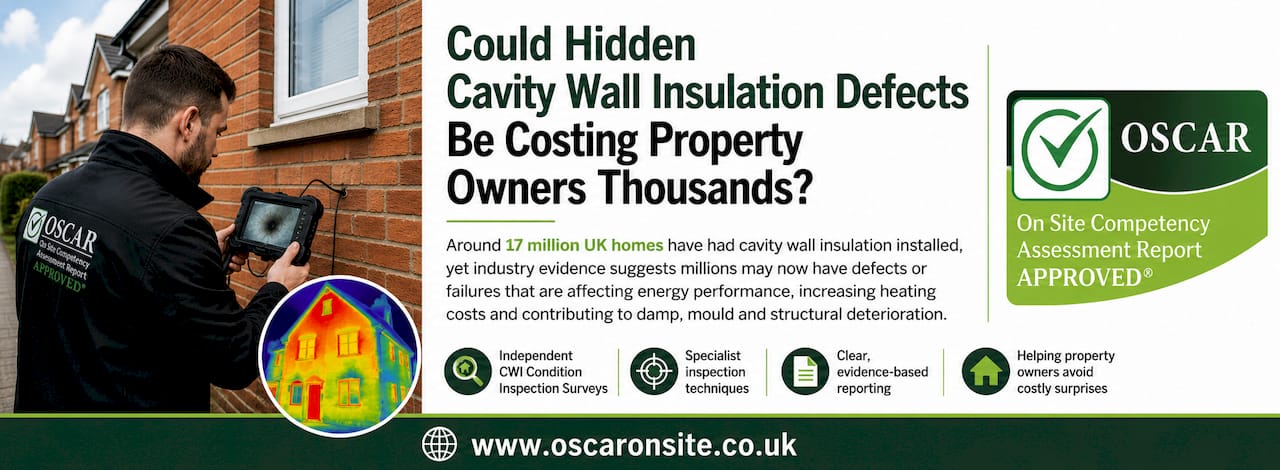
- Independent condition survey first. Borescope inspection and thermal imaging identify exactly what is happening inside the wall before anyone touches it, a step our own condition inspection service is built around.
- Extraction only if justified, carried out by an OSCAR Onsite Accredited Member Firm working to PAS 2030 and relevant British Standards, never as a default sales pitch.
- Technical monitoring during the works, keeping an independent record of what comes out and what condition the cavity is left in.
- Clearance certification on completion, confirming the cavity has been properly restored to a clean, breathable condition.
Expect some disruption during extraction, dust, noise, and temporary access restrictions around affected walls.
- Ventilate rooms adjacent to the working area throughout the day
- Move furniture away from external walls before the crew arrives
- Ask about daily clean-up standards before work starts
Pro Tip: Never agree to extraction on the same visit as a sales pitch. A proper survey report should exist first, on paper, before any removal date gets booked.
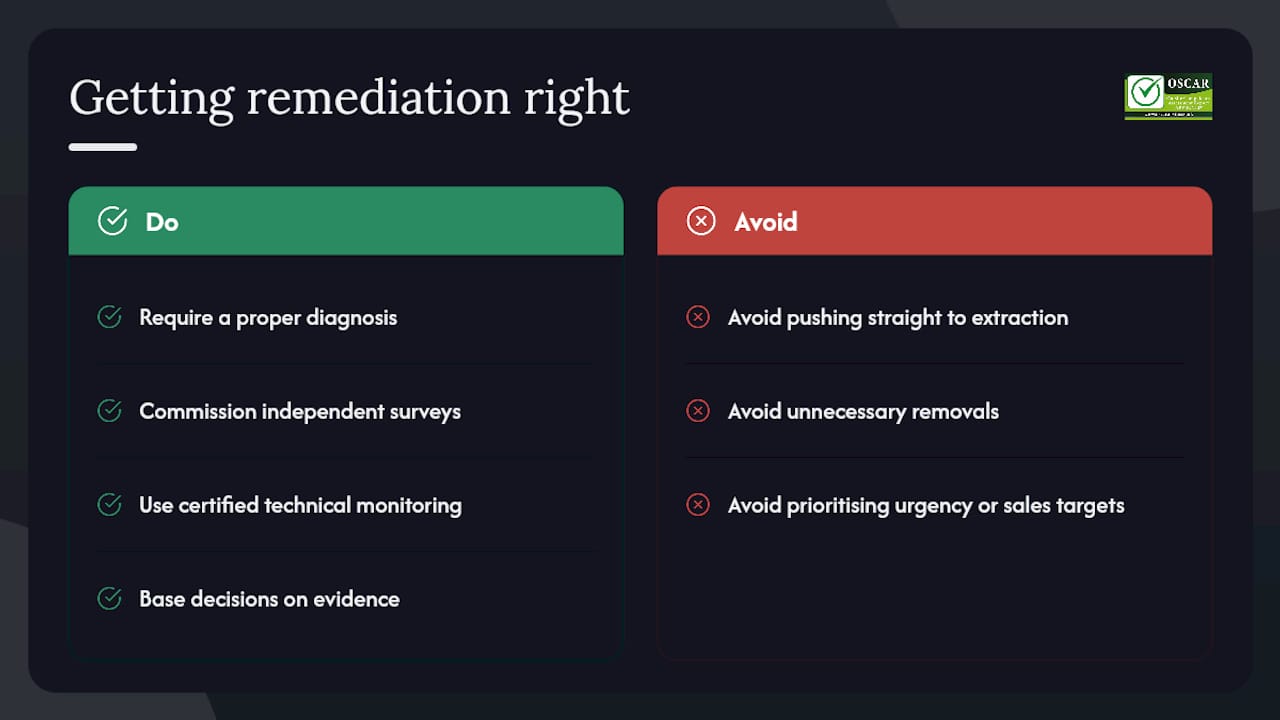
OSCAR Onsite’s perspective on getting remediation right
Too many households get pushed straight to extraction when a proper diagnosis would show repair, or no action at all, is enough. Independent surveys and certified technical monitoring exist precisely to stop unnecessary removals and protect the building fabric. Evidence should lead every decision, not urgency or a sales target.
How OSCAR Onsite supports households through this process
OSCAR Onsite exists for exactly this moment: independent, evidence-led answers when you cannot tell whether your wall insulation needs fixing, removing, or leaving alone. We offer condition inspection surveys using borescope and thermal imaging, extraction delivered through Accredited Member Firms, technical monitoring during works, and clearance certification once the job is done.
Before anything gets removed from your walls, book an independent CWI Condition Inspection Survey. It gives you a written, evidence-based report you can take into any conversation with your installer, TrustMark, or a guarantee provider, and it protects you from being talked into extraction you may not actually need. If the survey confirms removal is the right call, we can connect you with an Accredited Member Firm for the extraction itself, followed by independent monitoring and your clearance certificate.
Sources
- Gov
- Faulty energy efficiency installations – Parliament UK
- Get help with faulty solid wall insulation – Citizens Advice