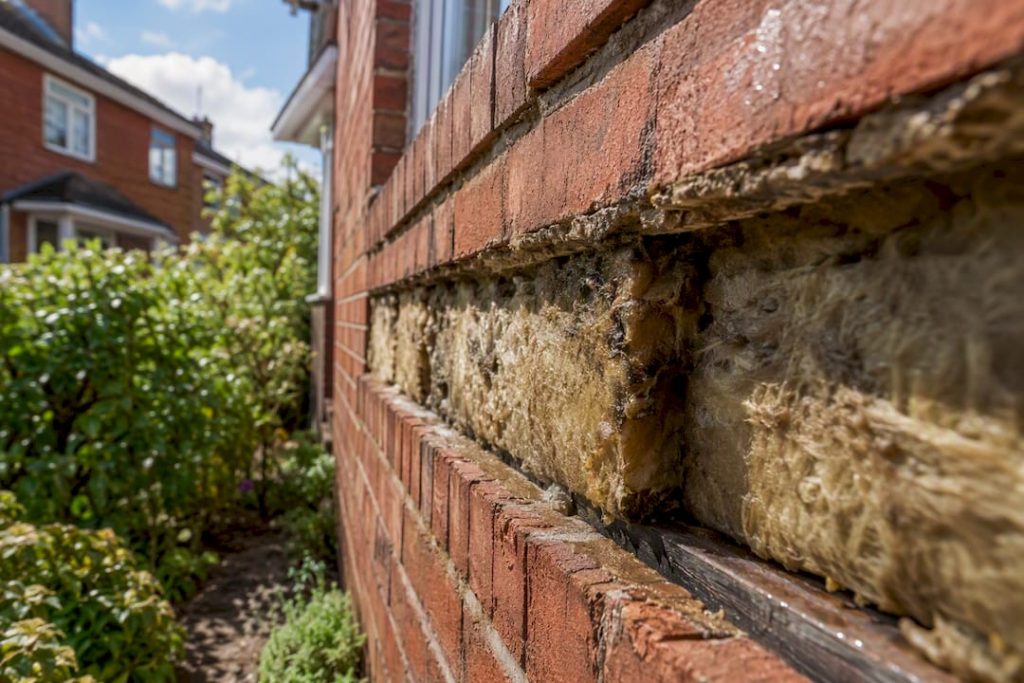
If your cavity insulation is wet, stop anything that adds moisture to the affected room and book an independent cavity wall insulation (CWI) condition inspection straight away. Do not let a fitter who profits from extraction diagnose the problem.
- Isolate the room if mould or condensation is severe, and keep children or anyone with respiratory issues away from it.
- Reduce humidity: stop drying laundry indoors, crack a window when the weather allows, and turn off unnecessary humidifiers.
- Photograph damp patches, mould, and any staining on external walls, dated and labelled by room.
- Call for an independent survey, and check the surveyor’s credentials against PAS 2030, TrustMark, and NVQ Level 2 (CWI Surveying & Extraction) before booking.
Where the evidence points to extraction, an OSCAR CWI Condition Inspection Survey followed by an OSCAR-accredited contractor for removal and technical monitoring is the safest route forward.
Key Takeaways
Diagnosing wet cavity insulation with an independent survey before extraction prevents unnecessary costs and protects homeowners from sales-led removal decisions.
| Point | Details |
|---|---|
| Act on moisture signs early | Isolate affected rooms, cut indoor humidity, and photograph damp patches before booking a survey. |
| Independent survey comes first | A borescope and thermal imaging inspection identifies the root cause before anyone touches the wall. |
| Not all wet insulation needs removal | Dry, stable insulation with a fixable external defect often just needs repair, not extraction. |
| Check credentials before hiring | Insist on TrustMark, PAS 2030:2023, and NVQ Level 2 trained operatives for any extraction work. |
| OSCAR Onsite offers the full pathway | Independent condition inspection, accredited extraction referral, and clearance certification in one route. |
Table of Contents
- How to spot wet or saturated cavity insulation
- Why wet cavity insulation is a problem for your home and health
- Short-term actions to limit harm before a surveyor arrives
- Why an independent survey matters before extraction
- When is extraction actually justified?
- How professional cavity insulation extraction actually works
- What happens after extraction: drying, repairs and re-insulation
- How to choose the right surveyor and removal contractor
- What the UCL/BRE waterproofing research actually shows
- Why an evidence-first approach actually protects homeowners
- If you need help: what to request from OSCAR Onsite
- Sources
How to spot wet or saturated cavity insulation
Wet insulation rarely announces itself with a flood. It shows up as small, persistent clues that build a pattern over weeks.
- Rising damp at skirting boards, especially on external walls facing prevailing wind and rain
- Damp patches or bubbling behind wallpaper, often in corners or beneath windows
- Black mould spots on plaster, particularly in bedrooms with poor airflow
- Cold or noticeably damp patches on internal walls that don’t correspond to plumbing
- Water staining or a “tide mark” near the base of external elevations
A thermal imaging scan and a borescope inspection give a far more reliable picture than a torch and a guess. These aren’t DIY tools; a competent surveyor uses them to see moisture patterns inside the cavity itself, not just the symptoms on your plaster.
Pro Tip: Photograph the same damp patch at the same time over 24 to 48 hours, and take a photo of the matching external elevation too. That combination gives your surveyor far more diagnostic value than a single indoor snapshot.
Why wet cavity insulation is a problem for your home and health
Saturated insulation stops doing its job. Laboratory testing by UCL and BRE found U-values were consistently lower in dry conditions than wet ones, meaning wet insulation loses a meaningful share of its thermal performance right when you need it most.
There’s a structural risk too. Once moisture bridges from the outer to the inner leaf, it can trigger damp, mould growth, and eventually rot in timbers or plaster.
- Thermal performance drops as insulation saturates, pushing up heating bills
- Bridged moisture can travel through to plaster, skirting, and window reveals
- Timber lintels and joists near the cavity face slow, hidden rot risk
- Prolonged mould exposure can aggravate asthma and other respiratory conditions
BBC reporting on failed cavity wall installations documents households scraping mould off walls for years after botched jobs went unchecked. If you notice breathing difficulties or persistent coughing at home, keep a written symptom log alongside your photos. It strengthens both insurance claims and remediation records.
Short-term actions to limit harm before a surveyor arrives
You can’t dry out a cavity yourself, but you can stop things getting worse while you wait for the inspection.
- Ventilate rooms when the weather allows, and avoid sealing the property up completely.
- Cut down on internal moisture: stop drying laundry indoors, and vent your tumble dryer outside if you can.
- Limit use of the worst-affected room, especially for sleeping, if mould is visible.
- Keep dated photographs, retain any damaged plaster or skirting for inspection, and note your typical indoor humidity if you have a meter.
Resist the temptation to drill or cut into the wall to “see what’s going on.” Electrical cabling often runs through cavities, and older properties can contain asbestos in render or old insulation. Leave intrusive checks to a qualified surveyor who knows what to look for before touching the wall.
Why an independent survey matters before extraction
A proper CWI condition inspection combines borescope inspection, thermal imaging, and moisture mapping, alongside a review of external detailing such as damp-proof courses, lintel trays, and pointing. The result is a written report with clear recommendations, not a verbal opinion given on the doorstep.
Independence matters because the people who install or remove insulation have an obvious incentive to recommend removal, whether or not it’s genuinely needed. The Energy Saving Trust advises contacting the installer first and using a specialist removal company only where extraction is actually warranted, precisely to avoid this conflict.
- A survey identifies the root cause: is it the insulation itself, or a failed gutter or damp-proof course feeding moisture in?
- The written report supports insurance queries, warranty disputes, and mortgage lender questions
- It tells you definitively whether extraction is necessary or whether targeted repairs will fix the problem
Request an OSCAR CWI Condition Inspection Survey before agreeing to any extraction work. Field evidence consistently shows that removing insulation without first diagnosing the actual defect, a leaking gutter or a failed DPC, just adds cost without fixing anything.
When is extraction actually justified?
Removal isn’t always the answer, and a good survey will tell you which category you fall into.
- Confirmed wet insulation across a significant portion of an elevation, not an isolated damp patch
- Persistent internal damp that maps directly onto insulated walls, even after external repairs
- Insulation that’s visibly degraded, compressed, or contaminated with debris inside the cavity
- An insurer or mortgage lender requiring extraction as a condition following their own survey
If the insulation is dry and stable, and the damp traces back to a cracked pointing joint or blocked weep hole, repairing the detailing is usually the smarter fix. Note that removal can sometimes invalidate existing installation guarantees, so check your contractual terms and get the independent report in hand before instructing any extraction.
How professional cavity insulation extraction actually works
On the day, a competent contractor follows a defined sequence rather than improvising.
- Survey and access planning, confirming scaffold or ladder access to the affected elevation
- Drilling new holes or reopening the original injection points, plus base holes near ground level
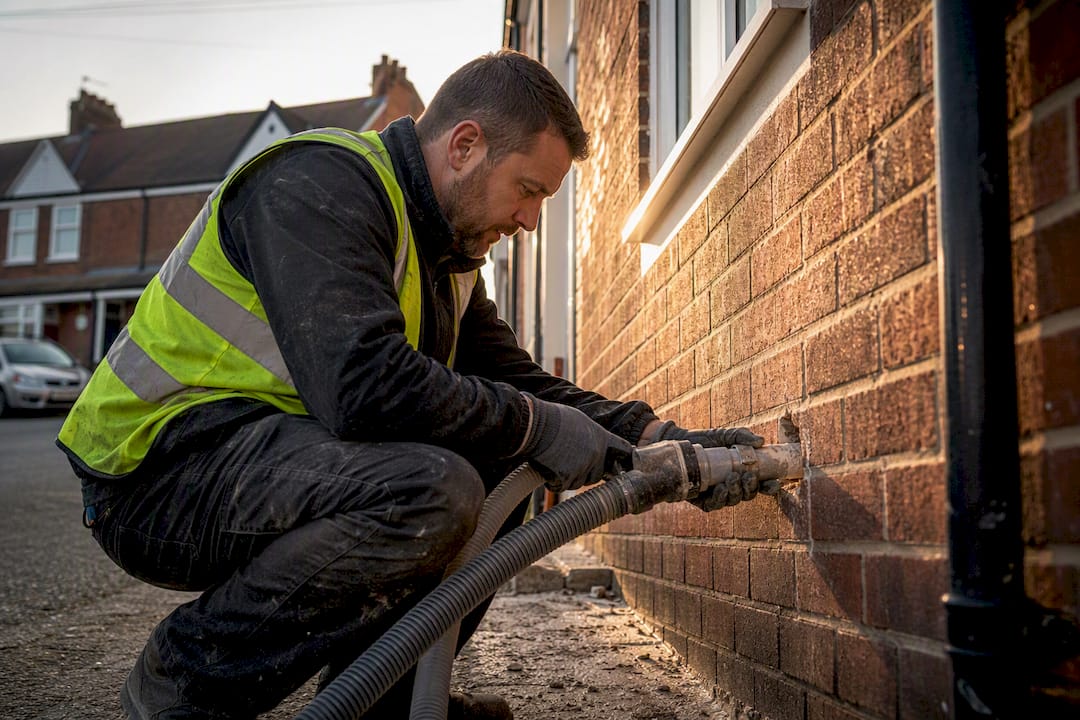
- Industrial vacuum extraction for beads and mineral wool, using negative-pressure containment to stop dust and debris escaping into the room or garden
- Mechanical agitation or core-drilling where the material is a bonded sprayed foam
- Borescope inspection to confirm the cavity is clear, followed by hole reinstatement
Material type drives both the method and the difficulty. Mineral wool vacuums out fairly easily. EPS beads can cling to cavity faces through static and compaction, and bonded sprayed foams often need core-drilling, making them the slowest and most expensive to clear properly.
- Industrial vacuum pods and negative-pressure containment units
- Borescope cameras for pre and post-extraction checks
- Sealed waste containment for safe disposal
Pro Tip: Never accept a job as finished without a post-extraction borescope or thermal check and a formal clearance certificate. Without one, you have no proof the cavity was actually cleared.
What happens after extraction: drying, repairs and re-insulation
Extraction is the midpoint of the job, not the end of it.
- Allow proper drying time and monitor relative humidity rather than guessing by feel
- Repair the external defects that let moisture in: pointing, damp-proof courses, gutters and downpipes
- Check for salt contamination in plaster and render damage that may need making good
- Confirm structural checks where wall ties were disturbed during drilling or core removal
Once the cavity is confirmed dry, you have three real options: leave it empty, refill with a more suitable material such as EPS beads, or upgrade to external wall insulation if the cavity itself is unsuitable for refilling. Don’t re-insulate on a hunch. Get technical monitoring and a formal clearance certificate before redecorating or booking any re-insulation work.
How to choose the right surveyor and removal contractor
Credentials separate a competent job from an expensive repeat failure. Check for these before signing anything:
- TrustMark registration and PAS 2030:2023 compliance where the work falls under a retrofit scheme
- Operatives trained to NVQ Level 2 in CWI Surveying & Extraction
- Adequate public liability insurance and valid waste carrier credentials
Before instructing anyone, ask these questions:
- What’s your experience with independent CWI condition surveys, not just extraction jobs?
- Can you provide method statements and examples of similar properties?
- How do you confirm full removal, borescope, thermal imaging, or both?
- How do you manage waste disposal and hole reinstatement?
Walk away from any contractor offering a fixed-price extraction quote without an on-site survey, refusing to show qualifications, skipping a post-extraction inspection, or pushing you to extract before you’ve seen an independent report.
What the UCL/BRE waterproofing research actually shows
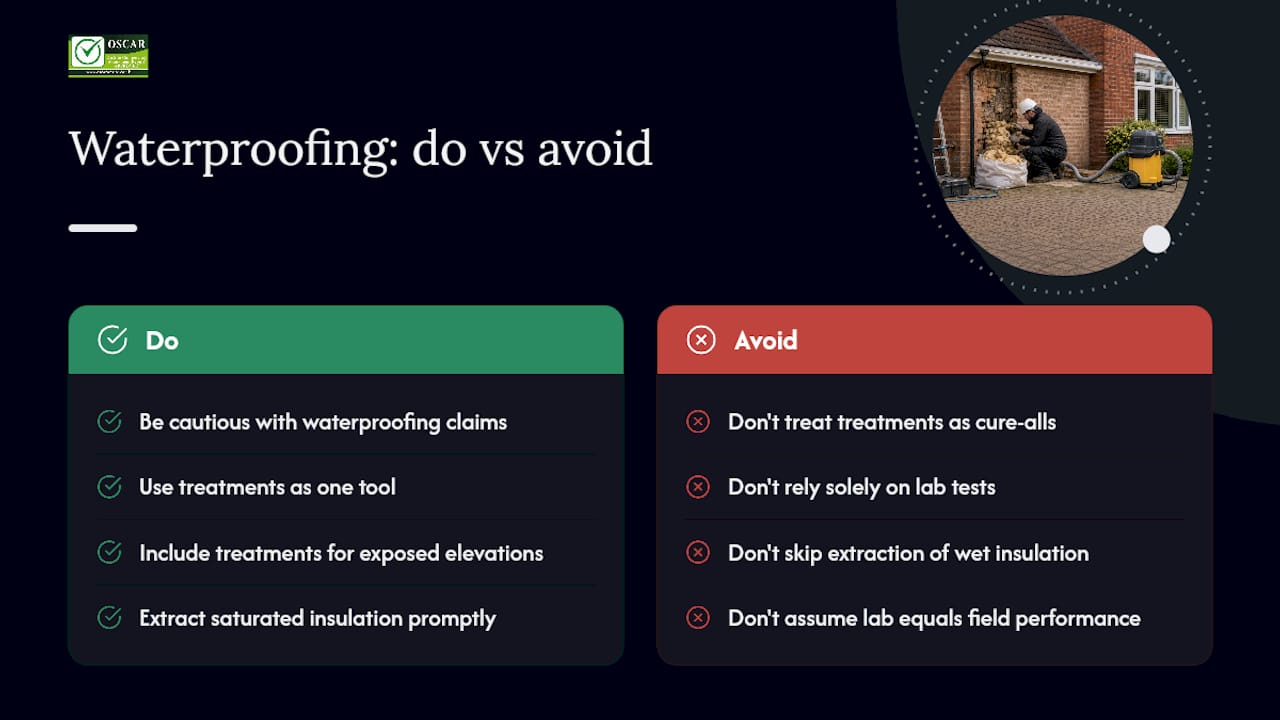
It’s worth being cautious here, because waterproofing treatments get oversold online as a cure-all.
UCL and BRE’s wind-driven rain testing found treated insulated wall samples absorbed less moisture than untreated ones, and dry walls consistently outperformed wet ones on U-value. But the sample sizes were small, and the researchers themselves flagged the results as limited.
The testing relied on extreme wetting cycles under laboratory conditions. Real-world performance depends heavily on ABIS factors, as-built, in-service conditions like workmanship quality, material ageing, and actual site exposure, none of which a lab test can fully replicate.
Treat waterproofing treatments as one tool among several, not a substitute for extraction where insulation has already caused internal damp. They may have a place in a wider remediation plan for exposed elevations, but they won’t rescue insulation that’s already saturated and contaminated.
Why an evidence-first approach actually protects homeowners
Most of the failures I see trace back to one decision: skipping the independent survey and letting the same firm diagnose and profit from extraction. That’s a conflict of interest dressed up as convenience.
OSCAR Onsite authored the NVQ Level 2 qualifications in CWI Surveying & Inspection and Extraction & Clearance precisely because the sector needed a measurable competence standard, not a sales pitch with a drill. Accredited operatives, an independent report, and a clearance certificate at the end aren’t bureaucracy. They’re what stops the same failure happening twice.
If you need help: what to request from OSCAR Onsite
OSCAR Onsite runs independent CWI condition inspection surveys, referrals to accredited extraction member firms, technical monitoring, and clearance certification, plus the NVQ training that underpins all of it. None of this is sales-led extraction; the survey comes first, and extraction only happens if the evidence supports it.
If you’re facing damp patches, mould, or cold walls linked to your cavity insulation, request an independent CWI condition inspection survey before agreeing to any extraction work. Where removal is genuinely justified, ask about an OSCAR-accredited extraction service with technical monitoring and a formal clearance certificate built in. Book your inspection now and get a written report you can actually rely on.
Sources
- UCL and BRE WDR testing and waterproofing treatments (DESNZ-funded report)
- Insulation scandal: ‘I have to scrape mould off the walls’ – BBC News
- Cavity wall insulation advice — Energy Saving Trust